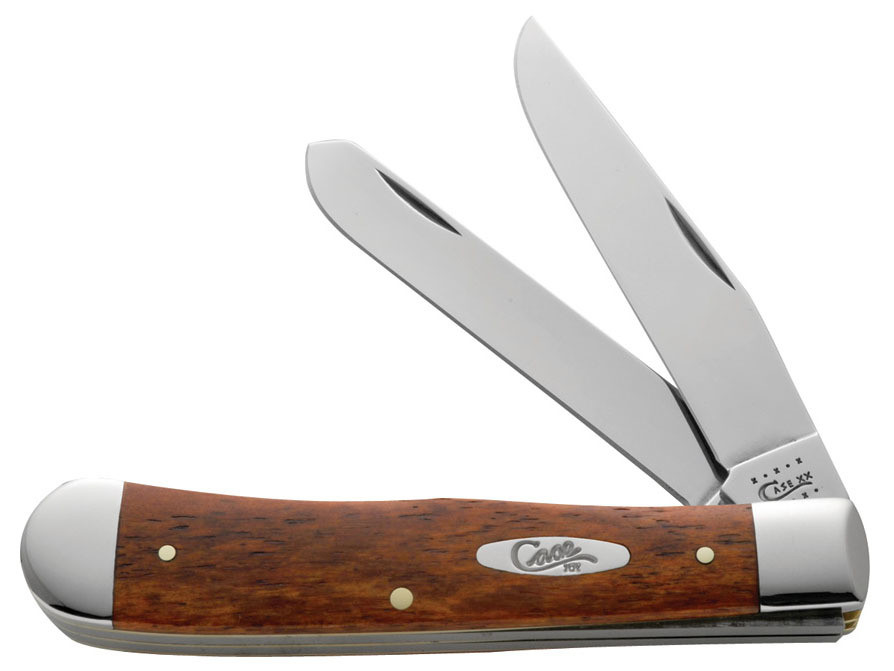
The Trapper earned its reputation through a century of hard use. Case introduced the pattern 54 during the Tested era (1920–1940), building on earlier slim jack designs that European cutlers brought to America. At 4⅛" closed with two full-length blades opening from the same end, the Trapper balances pocket carry against genuine utility. The clip blade handles detail work and piercing cuts. The spey blade—with its rounded tip and curved belly—makes long slicing cuts without puncturing what's underneath. Trappers who skinned small game understood why that mattered. So do hunters, ranchers, and anyone who's opened enough packages to appreciate having the right blade for the task.
Why did trappers need two different blades?
Fur trappers needed clean pelts. A punctured hide meant lost money. The clip blade handled camp tasks, cutting cordage, and dispatch work where a sharp point mattered. The spey blade—originally designed for castrating livestock—became the skinning tool because its blunted tip couldn't accidentally pierce the gut cavity during long opening cuts. Modern users find the same blade pairing works for everything from field dressing game to opening boxes without damaging contents. The spey also excels at spreading, scraping, and any push-cut where you want control without a stabbing risk.
Which Case Trapper size fits your carry?
Case produces the Trapper in three sizes. The standard pattern 54 measures 4⅛" closed and remains the benchmark—large enough for real work, still pocket-friendly. The Mini Trapper (pattern 07) scales down to 3½" for lighter carry while keeping the same blade configuration. The Tiny Trapper drops to 2⅜" for keychain or watch pocket carry. All three maintain the twin clip-and-spey layout that defines the pattern. Handle materials range from synthetic and jigged bone to genuine stag, with blade options including Tru-Sharp stainless, Chrome Vanadium for easier sharpening, and premium steels like S35VN on select models.
Are Case Trappers good for collecting?
The Trapper pattern drives more Case collecting than any other. Tang stamps date each knife to its production year, creating documented history. Tested-era Trappers (pre-1940) command serious collector premiums, particularly in green bone or stag with original short bolsters. Case releases seasonal handle variations, commemorative editions, and limited collaborations that sell through quickly. The pattern's popularity means strong secondary market demand—collectors know they can move Trappers when upgrading their collections.
 Free Shipping
 Made In USA