
Collections
 Free Shipping
 Made In USA
Case has been making knives since 1889, when brothers William Russell, Jean, John, and Andrew Case began selling them from a wagon in upstate New York. The company settled in Bradford, Pennsylvania, in 1905 and has built there ever since, joining fellow Bradford maker Zippo under shared ownership in 1993. Each Case knife still passes through more than 160 production steps, many of them by hand, and the line anchors our wider range of traditional knives.
Case builds most of its catalog on two steels, and the choice matters more than the pattern. Chrome Vanadium is a carbon steel that takes a keen edge fast, sharpens on a basic stone in seconds, and develops a patina that longtime carriers consider part of the appeal. Tru-Sharp stainless trades some of that easy sharpening for corrosion resistance and a finish that stays bright. Modern lines like the Kinzua, Marilla, and Crossroads move up to CPM S35VN, and select collector pieces run Damascus. Our comparison of every major knife steel covers all of them.
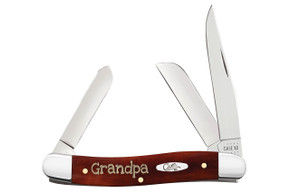
Every Case knife carries a dated tang stamp, a system of dots and symbols that pins it to the year it left Bradford. That practice turned a working cutlery company into a collecting one, and the Case Collectors Club has run since 1972. It also makes a Case knife a natural gift, and engraved Case knives add a name or date to that built in history.
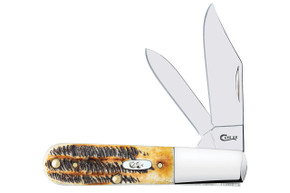
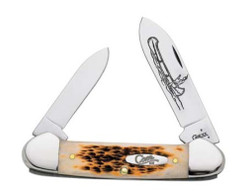
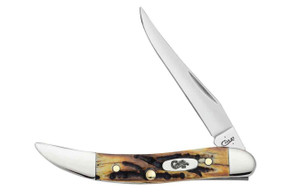
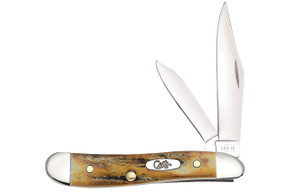
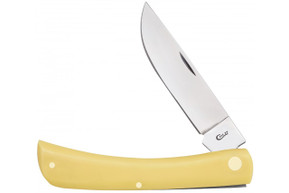
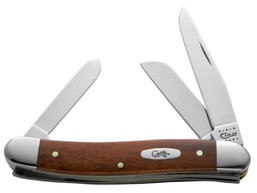
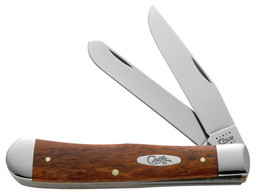
Our guide to traditional pocket knife patterns explains how each design came to be. The Trapper pairs clip and spey blades, the Stockman adds a third for ranch work, the Canoe keeps a symmetrical profile, and the Peanut shrinks to shirt pocket size. Single blade patterns include the Barlow, the farm built Sod Buster, and the slim Texas Toothpick.
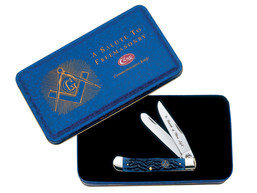
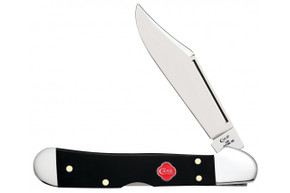
For positive blade security, the Copperlock, RussLock, and Cheetah lock up in traditional dress. Handles run genuine bone, stag, mother of pearl, and hardwoods over brass or nickel silver bolsters, and our guide to knife handle materials explains how each wears. For gifting or starting a collection, Case combos and specials bundle patterns in one set.
 Free Shipping Made In USA