 Free Shipping
 Made In USA

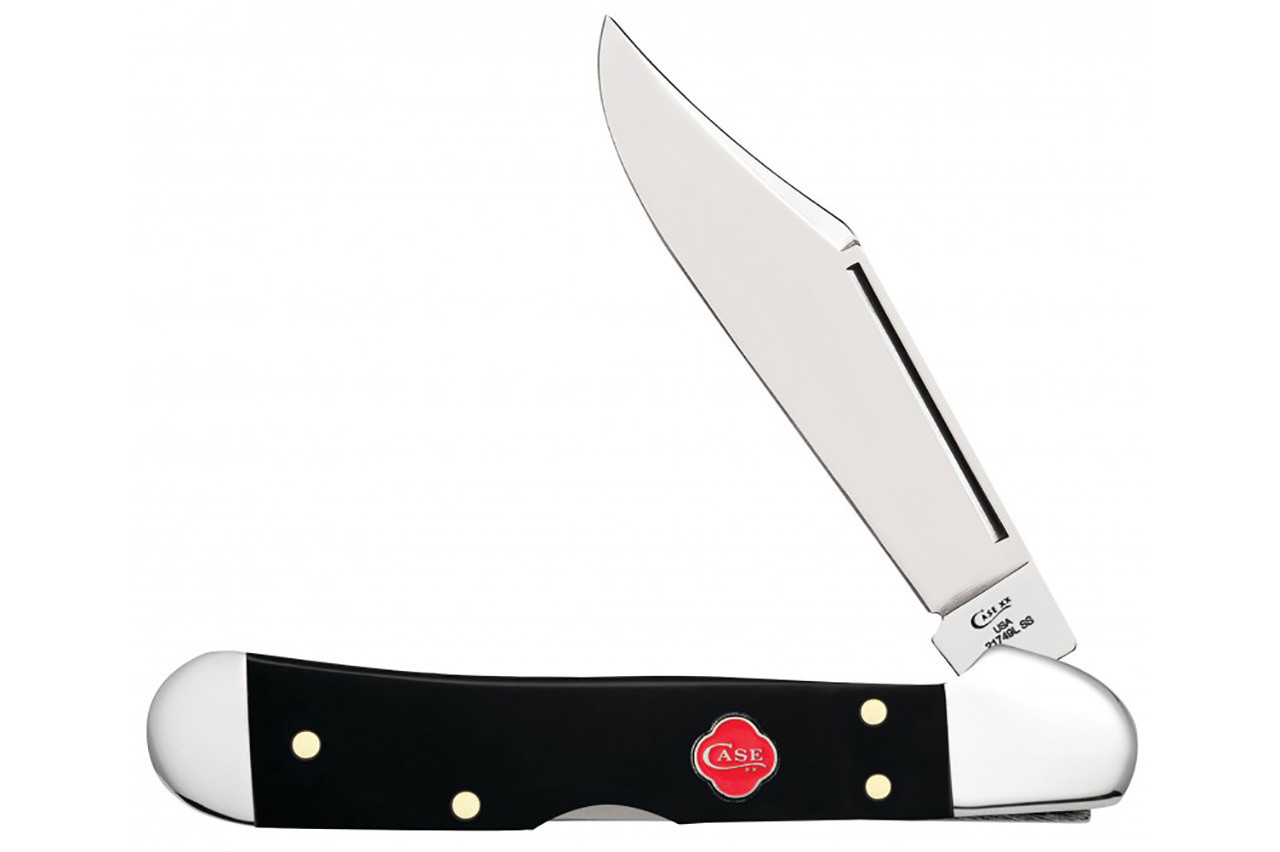
The Case Copperlock arrived in 1997 as an entirely new pattern. Sales manager Dick Kearney asked designer Tom Hart for a single blade lock Case Trapper, and Hart drew a flat blade with a long nail nick and cut swedge. Early samples showed the blade tang rising above the bolster, so they borrowed the humped bolster from the Copperhead pattern, which gave the knife its name. Case historian Shirley Boser assigned pattern 549, combining 54 for the Trapper and 49 for the Copperhead, and it remains a modern classic among Case knives.
Unlike a slip joint, where spring pressure alone holds the blade open, the Copperlock's mid back lock engages a notch in the tang and holds the blade until you press the release on the spine. That adds real security for piercing and heavier cuts while keeping a frame that looks and carries like a traditional folder. Our guide to knife lock types explains how the lockback compares, and the Copperlock is a natural step up among our traditional knives.
The standard Copperlock, pattern 549, measures 4.25 inches closed with a blade of about 3.5 inches, as on the Copperlock Congratulations edition. The Mini Copperlock, which followed by 1998, drops to about 3.63 inches closed with a 2.7 inch blade and weighs under 2 ounces, and it makes up most of our current stock. Both share the humped Copperhead bolster that covers the blade tang corner when closed.
The Copperlock runs a long clip point in Tru-Sharp stainless, Case's name for 420HC, with a full flat grind; our comparison of every major knife steel covers it. It debuted in Old Red bone with Rogers jig, and current handles include jigged bone in blue and green apple, Bonestag, chestnut and amber bone, curly oak, burlap Micarta, and a Mini Copperlock in abalone. Our guide to knife handle materials explains each.
Case celebrated the Copperlock's 10th anniversary in 2007 and retired it to the Case XX Vault in July 2008 before bringing it back. Its clean flats also make it an easy knife to personalize with engraved Case knives.
Free Shipping Made In USA