
Collections
 Free Shipping
 Made In USA

Spyderco started in 1976 with Sal and Gail Glesser living out of a converted bread delivery truck, selling at fairs and trade shows around the country. They settled in Golden, Colorado in 1978 and built the Tri-Angle Sharpmaker before ever making a knife. The first one came in 1981, and the C01 Worker arrived with what nobody else was doing: a round hole in the blade for ambidextrous one-handed opening and a clip that carried the knife at the top of the pocket instead of the bottom, with a serrated edge option following a year later. Sal Glesser entered the Blade Magazine Cutlery Hall of Fame in 2000 for it. Our Spyderco history tells the whole story, from the bread truck to the Paramilitary 2.
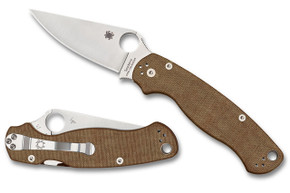
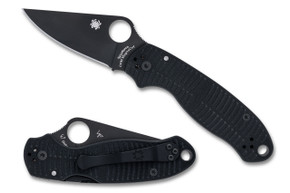
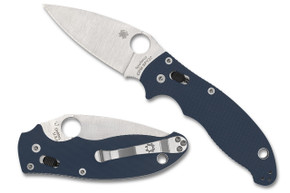
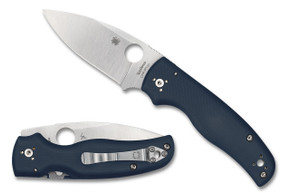
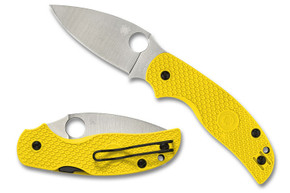
The patented Compression Lock keeps fingers out of the blade path on closing and carries the knives that define the modern catalog, including the Paramilitary 2, the scaled down Para 3, and the harder-use Shaman. Kevin Smock's button release variation adds a button on the show side that drops the lock without repositioning your grip, and it runs on both the Smock and the Sage 6. The Manix 2 uses the Ball Bearing Lock instead, and the Native holds the line on a traditional back lock.
Spyderco put the first powder metallurgy steel into a production knife in the mid-1990s with Crucible's CPM 440V, later renamed S60V, and has kept that position since through S30V, S90V, Maxamet, and ZDP-189. The Salt Series did the same for corrosion, moving from H-1 to LC200N to MagnaCut for knives that live around saltwater. CPM SPY27 came out of a 2020 partnership with Crucible and stays exclusive to USA production. Our comparison of every major knife steel covers how they differ in use.
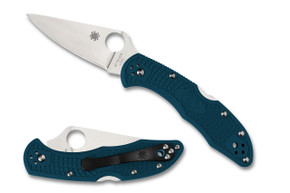
Five countries, each with a distinct role. Golden, Colorado builds the Compression Lock flagships. Seki City, Japan runs the VG-10 classics, the Delica and Endura among them. Taichung, Taiwan handles most premium collaborations, Maniago, Italy covers a smaller specialty run, and China builds the value tier led by the Tenacious. Sprint runs and dealer exclusives pull steels and handle materials that get made once, and new releases land here regularly.


 Free Shipping Made In USA