 Free Shipping
 Made In USA

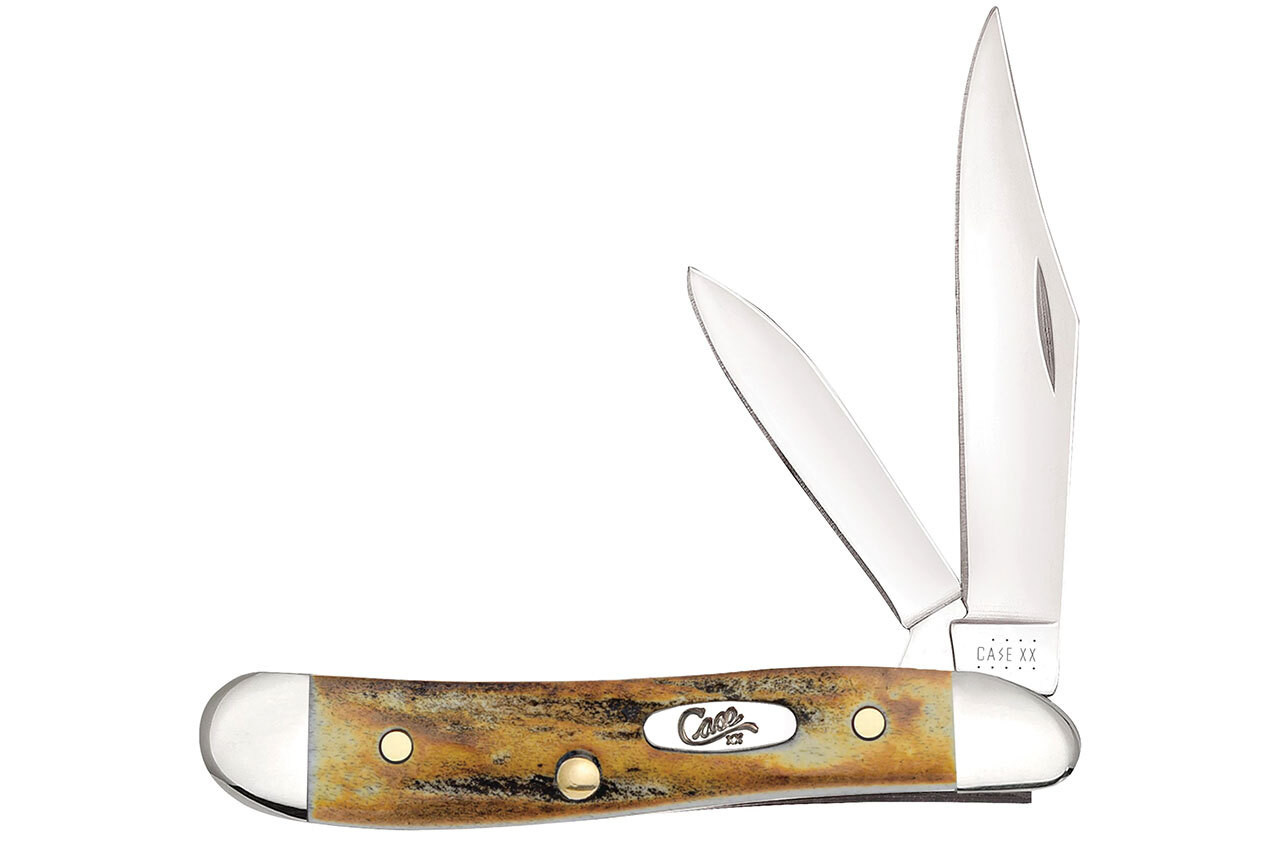
The Case Peanut, pattern 20, is a small, round ended serpentine jack knife that Case introduced sometime before 1915, and collectors named it for its petite, peanut shaped handle. At 2.875 inches closed and about an ounce, it was built for the watch pocket era and still disappears in a coin pocket or dress slacks. It remains one of the most popular first knives among Case knives.
The Peanut puts both blades on a single backspring at one end, keeping the other end clean and the knife thin. The clip master blade, about 2.1 inches, handles general cutting with a useful belly and a fine point, while the smaller pen blade takes light work like opening mail and trimming threads. On some versions the second blade is a spey, and a few have carried small scissors.
Like the larger Case Canoe, the Peanut belongs to the gentleman's knife tradition: a compact tool for everyday tasks rather than heavy work. It opens packages, cuts loose threads, and slices an apple at lunch without drawing attention, and its small size suits offices and dress settings where a larger knife might raise eyebrows. Nickel silver bolsters and brass liners give it a quality feel in hand.
Current Peanuts run Tru-Sharp stainless, Case's name for 420HC, which resists rust and resharpens easily; our comparison of every major knife steel covers it. Handles in our current stock include red stag, sambar stag, amber and pocket worn red bone, orange synthetic, brown Delrin, and Sparxx. Our guide to knife handle materials explains how each wears.
With more than a century of production, the Peanut offers collectors a deep field. Tested era Peanuts from about 1920 to 1940 in green bone, Rogers bone, or celluloid draw serious attention, and details like long pulls add value. For a modern piece with a personal touch, engraved Case knives turn a Peanut into a lasting gift.
Free Shipping Made In USA