 Free Shipping
 Made In USA

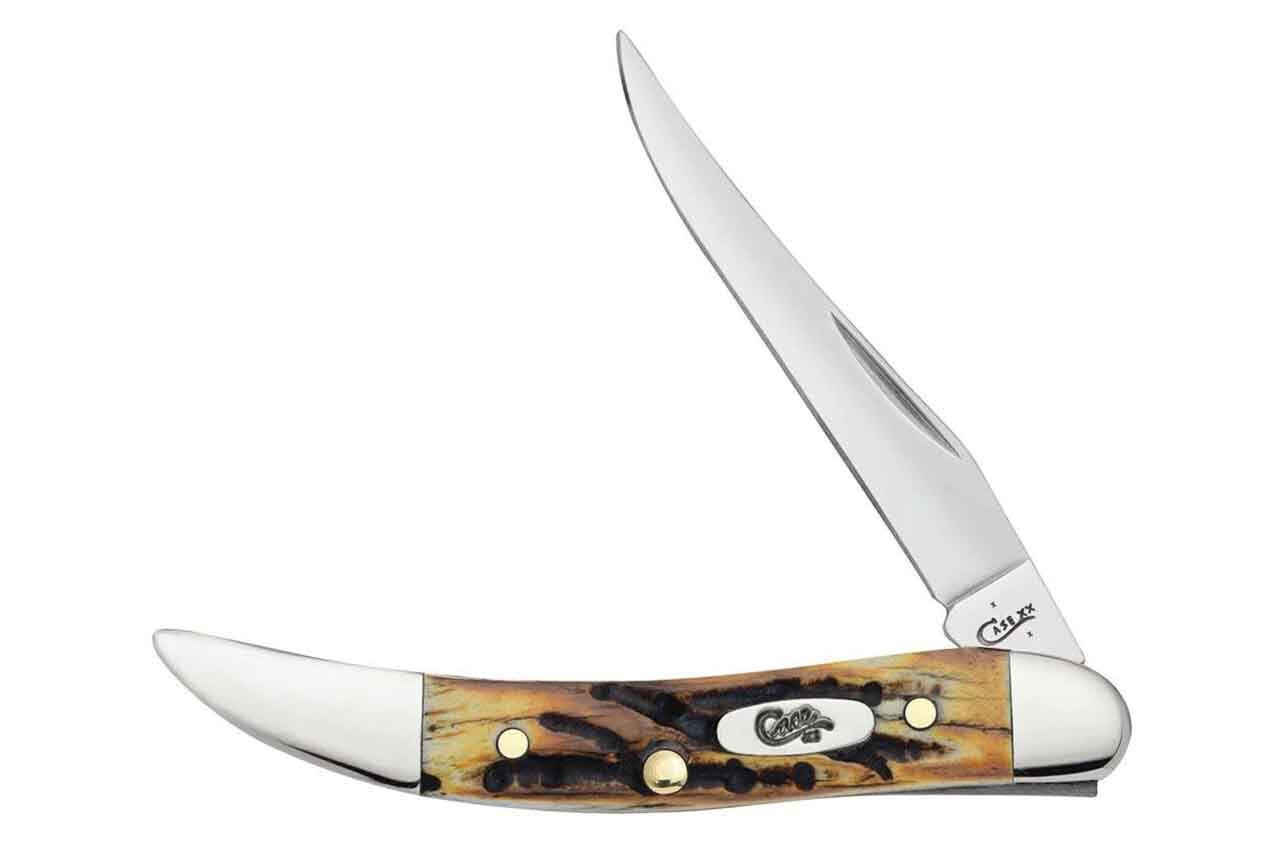
The Case Texas Toothpick is a slim, single blade slip joint built around one long clip point, descended from the long, slender clasp knives of southern Europe. Over the years the pattern has gone by names like tickler, fish knife, and switch knife, but the Texas name stuck. It is one of the classic single blade patterns among Case knives, alongside the Case Barlow and Case Sod Buster.
The long clip blade, sometimes called a California clip, defines the Texas Toothpick. It runs narrow and nearly straight before tapering to a fine point, so it excels at piercing, scoring, trimming, and precise slicing rather than heavy chopping. That slim geometry also made it a favorite for cleaning small fish, which is where the fish knife nickname comes from.
Case builds the Texas Toothpick in two sizes. The Small Texas Toothpick measures 3 inches closed with a 2.25 inch blade at about 1 ounce, small enough for dress pants. The Medium Texas Toothpick, pattern 094, stretches to about 4.2 inches closed with a blade of roughly 3.35 inches at about 2 ounces, for more reach in the same slim profile.
The handle tapers at both ends with a gentle curve through the middle, so it sits flat in a pocket and fills the hand without bulk. Nickel silver bolsters cap each end, and a single backspring holds the blade open in classic slip joint fashion with no lock to release. Our guide to knife lock types explains how a slip joint differs from a lockback.
Current Texas Toothpicks run Tru-Sharp stainless, Case's name for 420HC, a tough, rust resistant steel that resharpens easily; our comparison of every major knife steel covers it. Handles range from classic yellow synthetic to jigged bone and genuine red stag, and our guide to knife handle materials explains how each wears.
Free Shipping Made In USA