 Free Shipping
 Made In USA

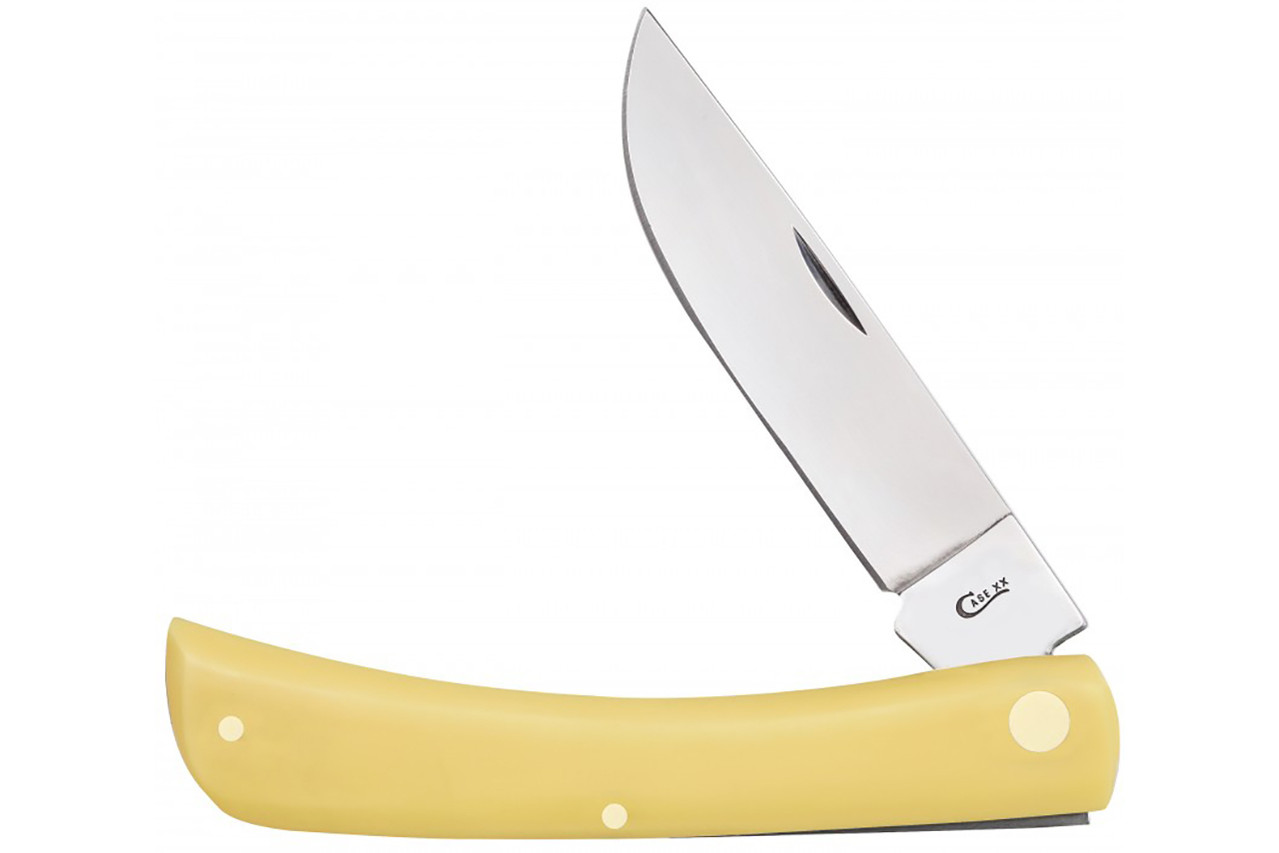
The Case Sod Buster is a bolsterless, single blade working folder that joined the Case line in the late 1960s with black composition handles, and the Sod Buster Jr. followed in 1970. The pattern descends from simple European farm knives, and Case trademarked the Sod Buster name and built a whole family around it. Our guide to traditional pocket knife patterns covers its roots, and the rest of the line sits in our full Case knives collection.
A shadow pattern carries no bolsters at either end, so the Sod Buster weighs less and costs less to build than a bolstered knife of the same size while giving up nothing that matters for cutting. Brass liners run the length of the frame for rigidity, and the smooth, curved handle lets you choke up for detail cuts or take a full grip for power. That plain, honest build is why it reads as a tool rather than a display piece.
Case calls the blade a skinner, a drop point with a long, continuous belly that engages the edge progressively, which makes it slice cleanly through twine, feed sacks, and cardboard. Most run Tru-Sharp stainless, Case's name for 420HC, while Chrome Vanadium and American Workman carbon steel builds take the working patina many carriers want. Our comparison of every major knife steel covers the tradeoffs.
The full size Sod Buster runs about 4.6 inches closed, large enough to work in a glove and still fine in a jeans pocket. The Sod Buster Jr. runs 3.625 inches closed, closer in footprint to the Case Barlow and the easier of the two for daily carry, which is why most of our current stock is Jr. Handles range from classic yellow, black, red, and orange synthetic to jigged bone, Bonestag, burlap Micarta, and Pocket Worn finishes.
The Crossroads XR Sod Buster Jr. is the modern version, with a 2.8 inch stonewashed CPM S35VN skinner, G-10 liners, scales in canvas Micarta, G-10, or laminate, and a tip up pocket clip. For a personal touch on any Sod Buster, see our engraved Case knives.
Free Shipping Made In USA