 Free Shipping
 Made In USA

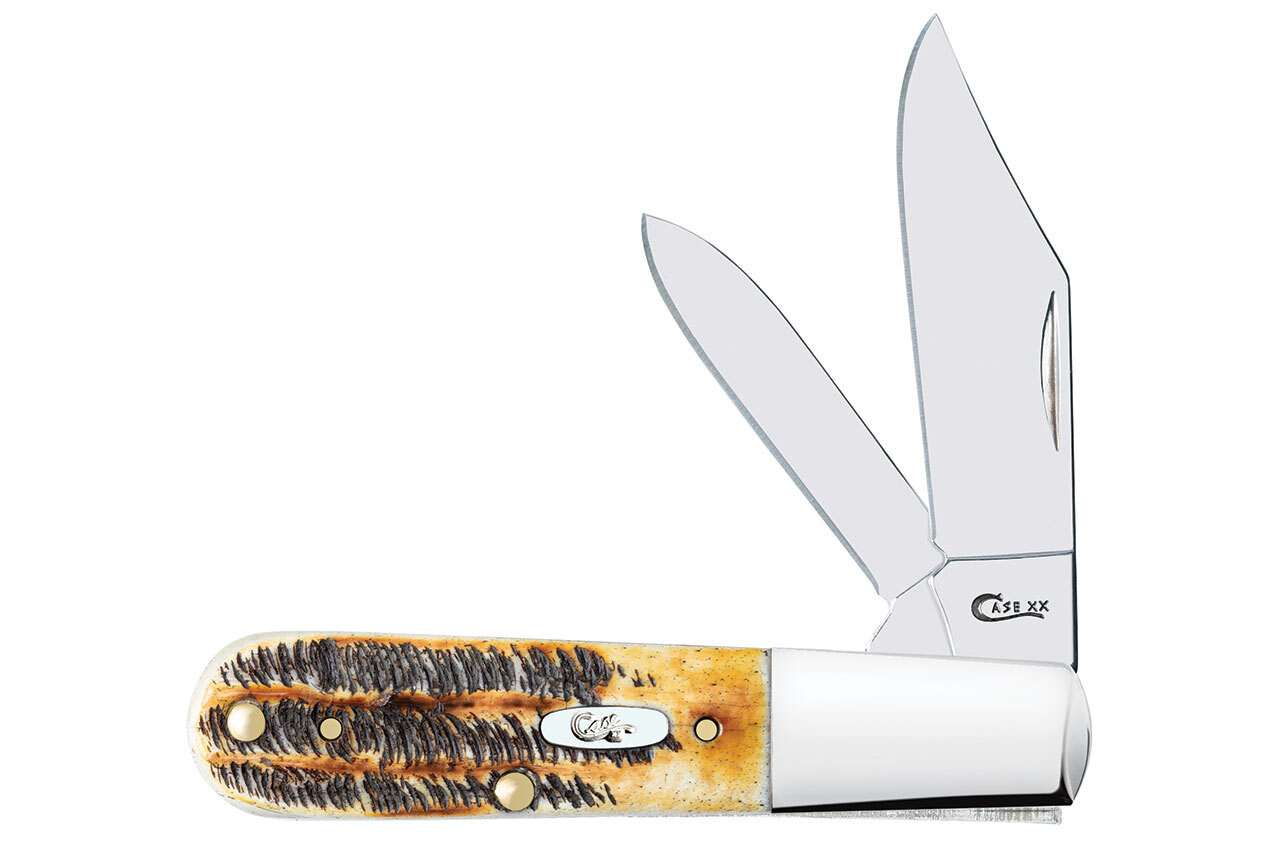
The Case Barlow, pattern 009, was among the first knives Case ever made, and Case revived it from the Case XX Vault in 2019 after years out of production. The pattern dates to 18th century England, where it earned a name as cheap, tough working cutlery before reaching America in the mid to late 1800s. Our guide to traditional pocket knife patterns covers why the Barlow became shorthand for a working man's knife, and the rest of the line sits in our full Case knives collection.
The Barlow's identifying feature is its extra long bolster at the pivot end, which puts metal where a hard used slip joint takes the most stress. The opposite end runs barehead, with no cap bolster, giving the Barlow its teardrop profile and letting it settle into a pocket without catching. The original logic was as much about cost as strength: one bolster instead of two and a price a farmhand could afford.
Case has built the Barlow with a single spear or clip blade and as a two blade jack with a clip and pen, both opening from the bolster end on a solid half stop. Our current stock centers on the two blade clip and pen Barlow, at 3.375 inches closed in Tru-Sharp stainless, Case's name for 420HC, with jigged and Bonestag handles. For another single blade worker, compare the larger Case Sod Buster.
The Crossroads XR Barlow is Case's modern take, keeping the original frame shape but forming the long bolster from G-10 and adding G-10 liners. Scales run Richlite, canvas Micarta, or burl G-10 over a 2.5 inch stonewashed CPM S35VN clip point, at 5.875 inches open and about 1.3 ounces. Our comparison of every major knife steel shows how S35VN compares to Tru-Sharp.
Barlows remain a classic first knife, small enough for a young carrier and simple to sharpen. Our guide to knife handle materials explains how bone and Richlite wear, and engraved Case knives add a name or date to make the gift permanent. Every Case Barlow is made in Bradford, Pennsylvania.
Free Shipping Made In USA