 Free Shipping
 Made In USA

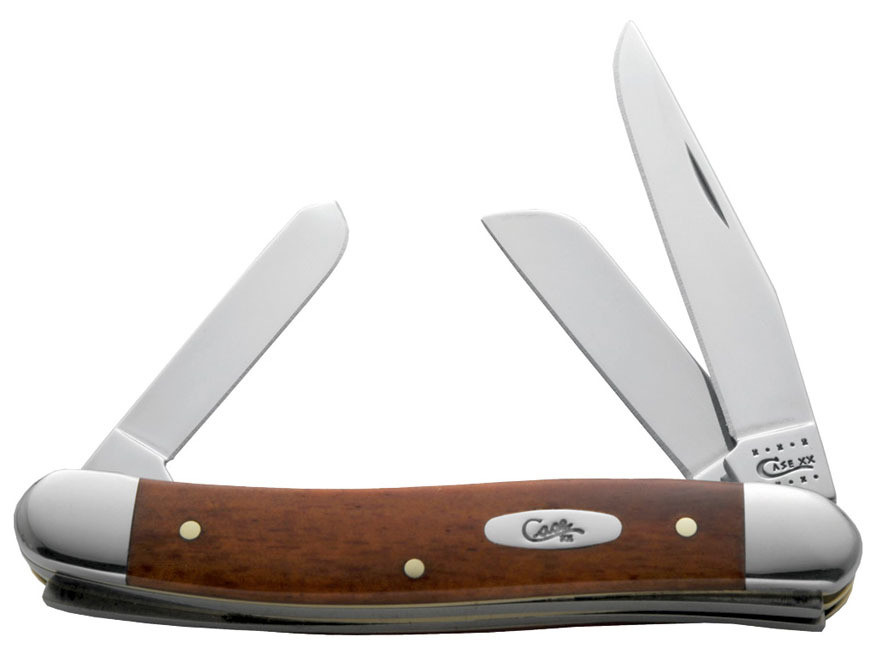
The Case Stockman puts three blades on a serpentine frame slim enough to ride in a front pocket, and it is one of the most popular patterns in the Case knives line. The clip handles general cutting, the sheepfoot gives a flat, pointless edge for controlled work, and the spey adds a blunt tip and long belly for slicing without piercing. Our guide to traditional pocket knife patterns covers where the configuration came from.
Case builds the Stockman on several frames, and the size labels don't map neatly to length, so it pays to check the closed length. Small Stockmans, like the 27 and 33 patterns, run under 3 inches. Case applies Medium to several frames between about 3.25 and 3.625 inches, including the 44 and the 18. The plain Stockman, pattern 47, sits at 3.875 inches without a size label, and the Large Stockman, pattern 75, tops out at 4.25 inches.
Our current stock centers on the 47 pattern Stockman, 3.875 inches closed at about 2.9 ounces, with clip, sheepfoot, and spey blades in Tru-Sharp stainless. It is long enough to work with a full grip yet still slim in a jeans pocket. Handles include 6.5 Bonestag, blue bone, amber bone, brown Delrin, and a Chevrolet embellished red synthetic edition.
Clip, sheepfoot, and spey is the classic trio, though some Case Stockmans swap in a pen blade. Tru-Sharp stainless, Case's name for 420HC, resists rust and resharpens easily, while Chrome Vanadium on select releases takes a quick edge and builds a patina. Our comparison of every major knife steel covers both, and our guide to knife handle materials explains bone, stag, and Delrin.
The number of frames and seasonal handle releases makes the Stockman a deep pattern to collect, and Case's dated tang stamps pin each knife to its year. The Case Trapper shares the spey blade, and the Case Canoe and Case Peanut round out a classic collection. For a gift, engraved Case knives add a name or date.
Free Shipping Made In USA