
Collections
 Free Shipping
 Made In USA
KA-BAR Knives traces to 1898 and the Tidioute Cutlery Company of Pennsylvania, reaching Olean, New York as Union Cutlery by December 1911. The trademark arrived in the 1920s from a barely legible letter by a fur trapper who killed a wounded bear with one of the company's knives after his rifle jammed; the surviving fragment read as "ka bar." When the Marine Corps adopted the company's fighting and utility knife in 1942, Marines called every version a Kabar no matter who built it, and by 1952 the company took the name outright. It still builds knives in Olean today.
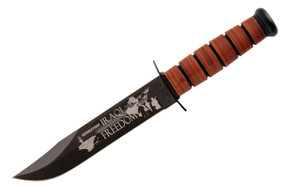
The 1217 USMC Fighting Knife is the direct production descendant of the wartime pattern: a seven inch 1095 Cro-Van clip point, stacked leather handle, and leather sheath, flanked by Army and Navy stamped versions, serrated variants, short models, and the eight inch Big Brother. The full breakdown by model number, stamp, and size lives on our KA-BAR military knives page, along with the Mark I deck knife and the commemorative runs.
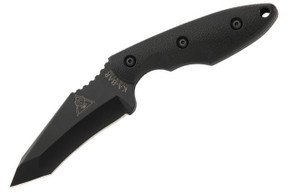
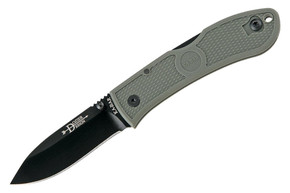
The Becker Knife and Tool line, designed by Ethan Becker, gives the brand its hard-use outdoor wing: thick 1095 Cro-Van workhorses like the BK2 Campanion that get batoned, pried, and abused by design. The TDI line, developed with Tactical Defense Institute founder John Benner, covers last-ditch fixed blades built for law enforcement carry, and the Dozier folders bring Bob Dozier's designs to one of the best budget lockbacks ever made. KA-BAR also owns the Ek Commando Knife Company, continuing the WW2-era John Ek fighting knife patterns under the KA-BAR/Ek mark.
Traditional models run 1095 Cro-Van at 56 to 58 HRC, a tough, easy-sharpening carbon steel covered in our knife steel guide. Stacked leather washer handles swell slightly when wet, which is why they hold grip where synthetics turn slick, with modern models running Ultramid and Zytel, all detailed in our knife handle materials guide. The catalog stretches from Jesse Jarosz's Camp Turok collaboration to the Tactical Spork and the Ka-Barley bottle opener, but the center of gravity never moves: honest fixed blade knives that have been earning their keep since before your grandfather carried one.
 Free Shipping Made In USA