 Free Shipping
 Made In USA

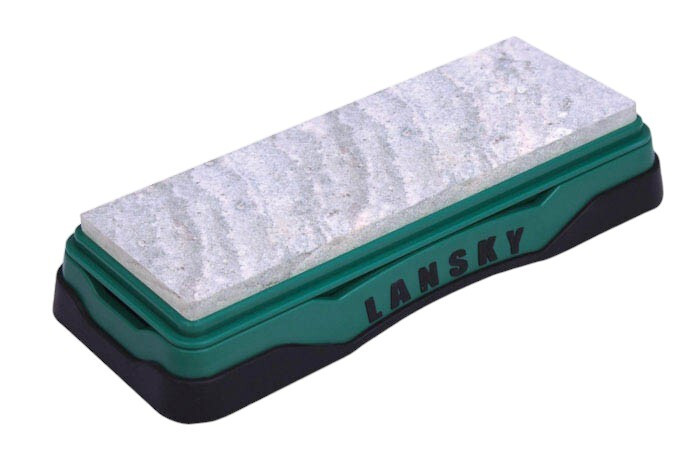
Sharpening stones are the foundation of every edge — the abrasive surface that sets the bevel, refines the scratch pattern, and determines how a blade performs in the cut. DLT Trading stocks sharpening stones across every major type, format, and grit level, from pocket-size field stones through full-size benchstones for dedicated bench work, covering coarse diamond plates for damaged edges and reprofiling through ultra-fine natural Arkansas stones for polished finishing. The right stone depends on the steel you're sharpening, the edge geometry you're building, the length of the blade on the bench, and whether you prefer a fast-cutting slurry or a low-maintenance dry surface.
Water stones cut fast and produce a sharpening slurry as the binder breaks down, exposing fresh abrasive continuously during the stroke. That speed makes them the preferred choice for routine maintenance and kitchen knife work, though they wear faster than other stone types and require periodic flattening to maintain a true surface. Oil stones, including natural Arkansas novaculite and synthetic aluminum oxide, cut slower but produce exceptionally refined edges with minimal stone wear. Arkansas stones polish as they sharpen, making them ideal as a finishing step after coarser work on synthetic or diamond abrasives. Diamond sharpening stones use industrial-grade diamond particles bonded to a steel plate, delivering the most aggressive cut rate of any stone type. They stay flat without maintenance, work dry or with water, and handle the hardest modern blade steels, including high-vanadium alloys like S90V and 10V, where softer stone types can struggle to cut efficiently.
A benchstone is a full-size sharpening stone built for stationary bench work rather than field use. The larger surface area matters for two reasons. First, longer blades like kitchen chef knives, fixed blade hunters, and working bushcrafters need stroke length to maintain a consistent angle from heel to tip, and a stone shorter than the blade forces compromises in stroke mechanics that show up in the final edge. Second, a wider benchstone tolerates heavier stock removal during reprofiling and damage repair without burning through a narrow track of abrasive. DLT stocks benchstones in water, oil, and diamond formats, including combination stones that pair two grits on a single body for users who want a coarse-to-fine progression without a full stone collection. Benchstones pair naturally with a stone holder or non-slip base for stable bench work, and with a flattening plate for water and natural stone users who need to true the surface between sessions.
Coarse grits under 400 handle reprofiling and damage repair where significant material removal is required. Medium grits from 400 to 1000 establish clean bevels and are the workhorse range for most sharpening sessions. Fine grits from 1000 to 3000 refine the scratch pattern and produce working edges that balance sharpness with edge retention. Ultra-fine grits above 3000 polish the apex for applications where a smooth, low-friction cut matters, including kitchen prep, skinning, and precision slicing. Many of these stones also serve as replacement abrasives for guided sharpening systems from Edge Pro, Lansky, and other platforms where stone selection drives the quality of the final edge. Finish any stone progression with a leather strop loaded with sharpening compound to remove the burr and refine the apex before the blade goes back to work.
Free Shipping Made In USA