 Free Shipping
 Made In USA

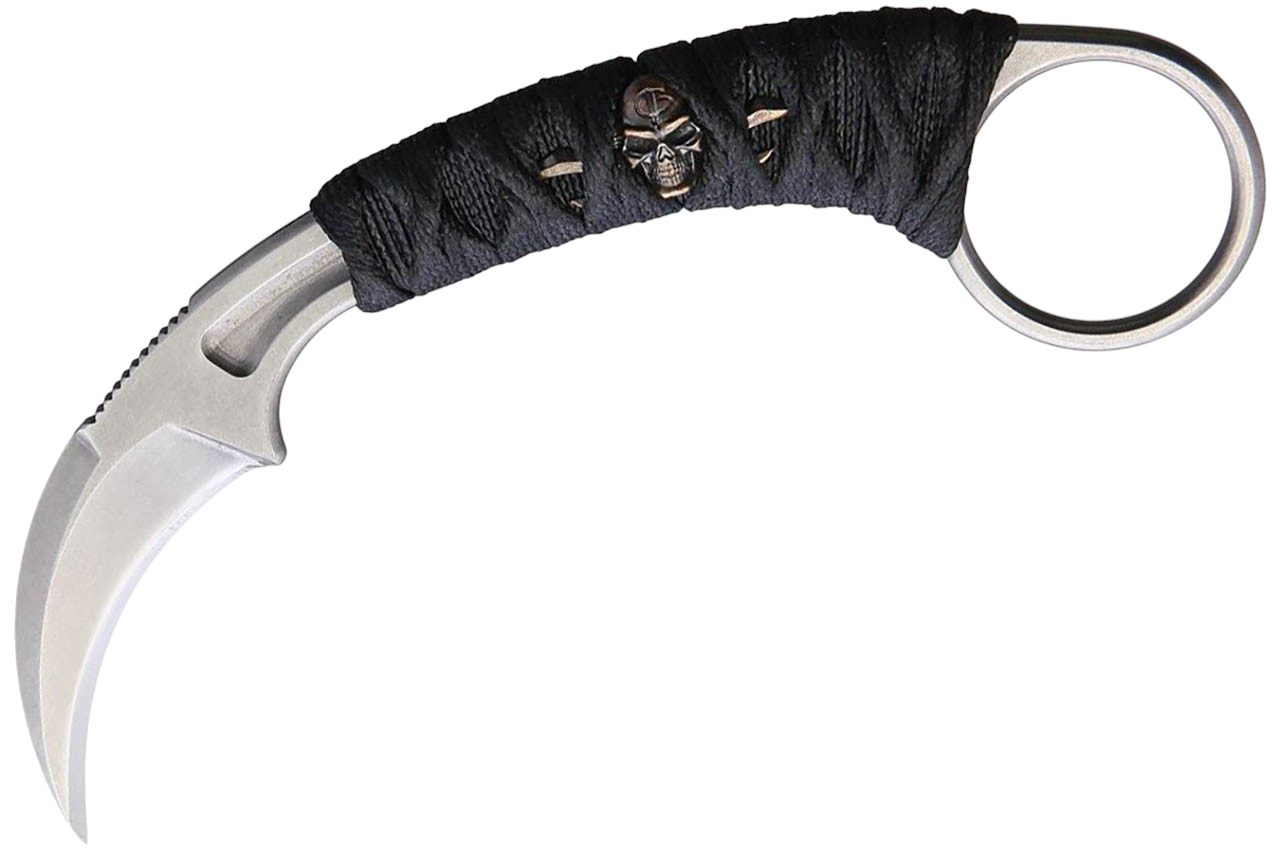
The karambit was a farm tool in Southeast Asia long before it was anything else, and Bastinelli treats the pattern with the respect that history deserves. Bastinelli Creations founder Bastien Coves has spent decades training with edged tools, and his karambits carry the same intent that runs through the full Bastinelli knives catalog. Nothing here is costume jewelry. These are knives shaped by people who cut with them, made in Italy, and priced to be carried instead of displayed.
The PiKa came out of a collaboration with Doug Marcaida and Funker Tactical, and it shows Marcaida's fingerprints in the proportions. It runs shorter than most production karambits, with a Bohler N690Co blade and a ring that sits exactly where your index finger wants it during transitions. Trace the curve through a cut and the edge does the work your wrist starts. The lineup covers a stonewashed base model, a blacked out version, and dressed up builds with cord wrapping and bronze or PVD menuki, a detail borrowed straight from Japanese sword furniture.
The Diagnostic strips the concept down further. Smaller, lighter, and priced where a first karambit ought to be, it comes in stonewashed and Cerakote finishes plus skull detailed variants for the buyer who wants some attitude with their utility. And utility is the honest story here. A claw blade hooks cordage, webbing, strapping, and clamshell packaging better than nearly any straight edge, which is why plenty of Diagnostics end up doing farm and warehouse work their owners never advertised.
N690Co earns its place on hard use karambits by shrugging off sweat and weather while staying easy to touch up, no small thing on a curved edge. Our breakdown of every major knife steel covers how it stacks up. Handles run from bare frames to traditional cord wrap, and our knife handle materials guide gets into why wrap still has a place on a working knife. Kydex sheaths molded to the curve finish the package, because a karambit you can't draw cleanly is just a strange looking paperweight.
Free Shipping Made In USA