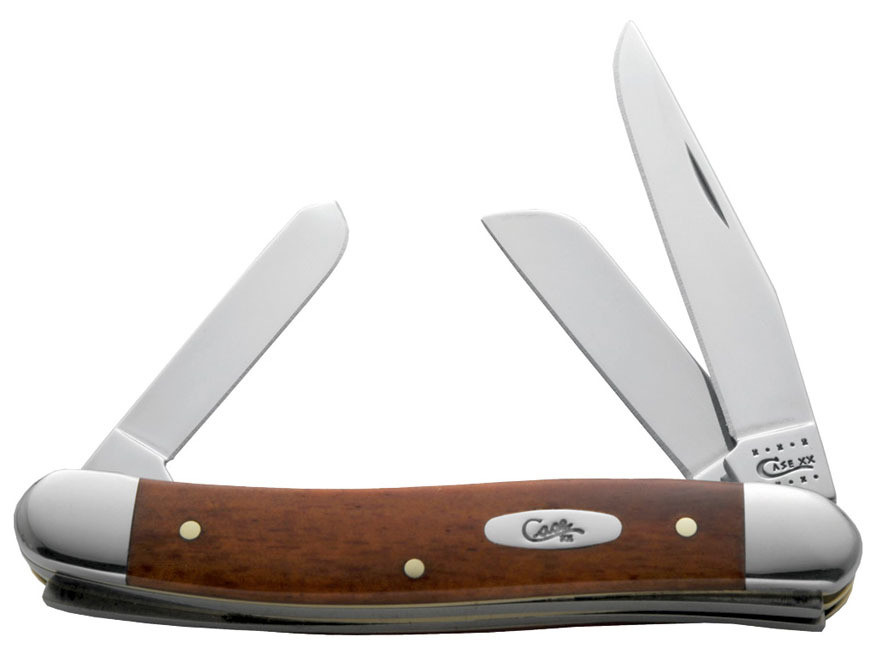
The Case Stockman knife pattern dates to the 1880s, making it older than Case itself. American cutlers developed the three-blade design for ranchers and farmers who needed multiple cutting options without carrying multiple knives. Case has produced Stockman patterns continuously since before 1940, using at least seven different pattern numbers across small, medium, and large sizes. The serpentine handle shape—that subtle S-curve—fits naturally in the hand during extended use. Two backsprings support three blades in a package slim enough for front pocket carry. More grandpas carried a Stockman than any other pattern, and the reason is simple: three blades handled virtually any task that came up during a working day.
What does each Stockman blade do?
The clip blade handles general cutting—the same versatile profile found on the Trapper. The sheepfoot blade provides a flat cutting edge with no point, ideal for whittling, carving, and controlled cuts where you don't want to pierce through material. The spey blade rounds out the trio with its curved belly and blunted tip, originally designed for castrating livestock but equally useful for skinning, spreading, and long slicing cuts. When one blade dulls in the field, switch to the next. Before easy sharpening options existed, having three edges meant a full day's work without stopping.
Which Stockman size works best?
Case produces the Stockman in three primary sizes. The Small Stockman (pattern 27/33) measures around 2¾" closed—compact enough for dress pants or light carry. The Medium Stockman (pattern 18/32/44) runs approximately 3⅝" closed and remains the most popular size, balancing blade length against pocket footprint. The Large Stockman (pattern 75) stretches to 4¼" closed for those who want maximum cutting real estate. Blade configurations vary by pattern—most combine clip, sheepfoot, and spey, though some substitute a pen blade. Handle materials span synthetic, jigged bone, stag, and wood across all sizes.
Do collectors pursue Stockman patterns?
The Stockman rivals the Trapper for collector attention. Case releases seasonal variations, special jigging patterns, and limited handle materials that move quickly through dealer inventory. Older Stockman knives with pre-1965 tang stamps attract premium prices, particularly in stag or green bone. The pattern's variety—multiple sizes, blade configurations, and decades of production history—gives collectors depth to pursue. Finding a complete run of Medium Stockman handle variations could occupy years of hunting.
 Free Shipping
 Made In USA