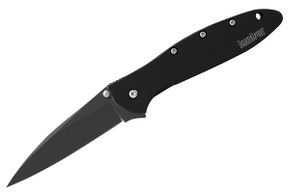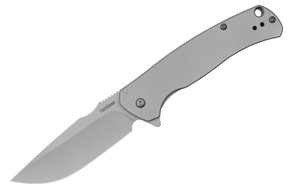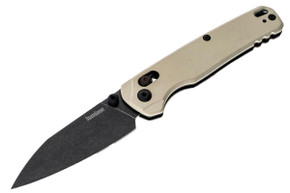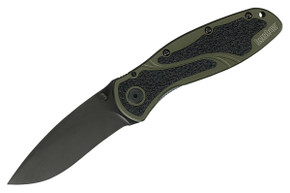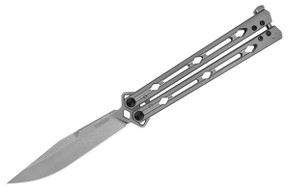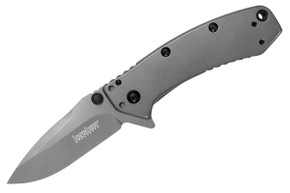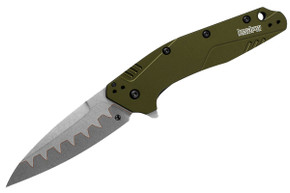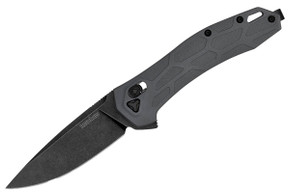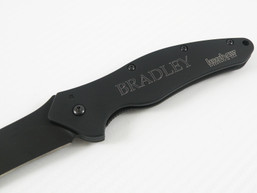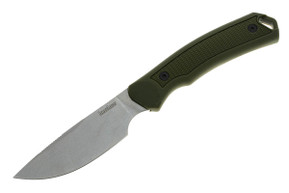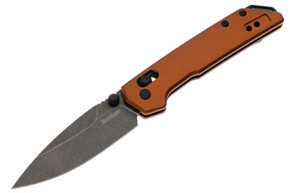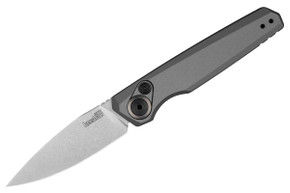
Kershaw manufactures knives in the United States, China, and Japan. The Tualatin, Oregon, facility produces over one million knives annually, including premium models like the Leek, the Launch series, and other USA-made folders. Oregon production features higher-end materials, and all USA-made knives undergo Kershaw's rigorous quality control.
Many Kershaw models are made in China and Japan. Overseas production does not mean compromised quality; Kershaw maintains the same standards across all facilities. Chinese-made knives undergo extra quality control checks before leaving the factory and again upon arrival in Oregon. Each product page on Kershaw's website lists the country of origin in the specifications.
The company's parent, Kai Group, has operated since 1908 and brings over a century of blade-making expertise from Japan to every Kershaw knife, regardless of where it's manufactured.
What is Kershaw's Knife Warranty?
Kershaw backs every knife with a Limited Lifetime Warranty against manufacturing defects. The warranty covers the original purchaser for the life of the knife and includes free sharpening whenever you send your knife in for evaluation.
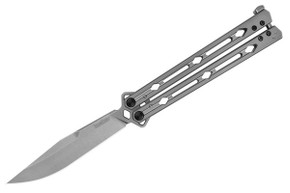
The warranty includes free replacement parts like pocket clips, screws, and other components for customers in the USA, Canada, and Mexico. Kershaw provides free sharpening with every warranty service, but this applies only to plain edges. Serrations cannot be sharpened; the plain portion of combo edges will be. If your blade breaks outside warranty coverage, Kershaw offers blade replacement for $25 as of November 2021. Launch series and butterfly knives require extra documentation as mandated by federal law.9
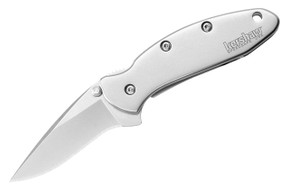
Are Kershaw Knives Good?
Yes. Kershaw has earned its reputation through five decades of proven performance. The brand consistently delivers reliable knives at accessible prices. You will find solid folders under $50 and premium USA-made Launch series knives around $150.
Kershaw knives excel at striking a balance between quality and value. Models like the Leek, Blur, and Iridium have become EDC staples because they work. SpeedSafe assisted opening deploys fast and locks solid. Heat-treated blade steels, from 14C28N to CPM MagnaCut, hold their edges well for their price class. The fit and finish rival knives costing significantly more.
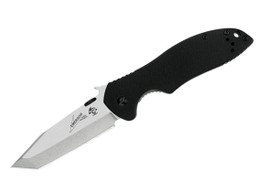
The company has won multiple "Knife of the Year" awards at Blade Show, including recognition for innovations like Composite Blade technology and collaborations with legendary designers Ken Onion, Rick Hinderer, and Emerson Knives. When a $60 Kershaw performs daily tasks as reliably as knives triple the price, that answers the quality question.
What is Kershaw's SpeedSafe Assisted Opening Technology?
SpeedSafe is Ken Onion's patented assisted-opening mechanism, introduced by Kershaw in 1998. It revolutionized the pocket knife market and remains one of the most reliable assisted-opening systems available.
The mechanism uses a torsion bar inside the handle to create tension that holds the blade closed. When you apply pressure to the flipper or thumb stud to start opening the blade, you overcome the torsion bar's resistance after about 10% of the blade's travel. Then, the spring-assist completes deployment rapidly. The blade locks securely with authority.
Here's the critical distinction: SpeedSafe requires the user to apply manual pressure to the blade itself to initiate opening. The user must physically contact and push the blade via the thumb stud or flipper. This makes SpeedSafe knives legal in most jurisdictions as manual-opening folders.
SpeedSafe deployment is smooth, one-handed, and completely ambidextrous on models with flippers. It's found on iconic Kershaw models, including the Leek, Blur, Clash, and Knockout.
What Blade Steels Does Kershaw Use?
Kershaw's steel selection ranges from budget-friendly to premium, matched to each knife's intended use and price.
For knives under $40, Kershaw often uses 8Cr13MoV, a Chinese stainless steel that is easy to sharpen and has decent edge retention for the price. This steel appears on entry-level models like the Clash. The company also uses 420HC, a high-carbon stainless steel with excellent corrosion resistance, further improved by Kershaw's heat treatment.
For mid-range knives between $40 and $100, Sandvik 14C28N is the main choice. This Swedish stainless steel was developed at Kershaw's request for better corrosion resistance and offers a balance of toughness, edge retention, and ease of sharpening. It is used on the Leek, Blur, Skyline, and many USA-made models. It takes a sharp edge and holds it well. D2 is another mid-range option, known for excellent edge retention and wear resistance. While it needs more maintenance than stainless options, it performs above its price class. The Iridium features D2 steel.
Premium steels are found on knives over $100. CPM 154 is a powdered metallurgy stainless steel with superior edge retention, corrosion resistance, and toughness. It is standard across the Launch series. CPM S35VN is a high-performance steel that offers enhanced toughness without sacrificing wear resistance and is common in premium variants. CPM MagnaCut is the latest super steel, offering exceptional edge retention with outstanding corrosion resistance and toughness. Recent Leek and Dividend variants use this steel. Kershaw's Composite Blade Technology, on select special editions, combines D2 tool steel at the edge with 14C28N or 154CM at the spine. This delivers edge retention where it matters while maintaining toughness and corrosion resistance.
Kershaw's precision heat treatment is as important as steel selection. The company's expertise in thermal processing ensures each steel performs at its best.
What is the Best Kershaw Knife for EDC?
The best model depends on your carry preferences and local laws, but several models dominate EDC recommendations.
The Kershaw Leek is the iconic Ken Onion design with a slim 0.35 inch profile that disappears in the pocket. It features SpeedSafe assisted opening and a 3 inch 14C28N blade. Made in the USA with exceptional fit and finish, it is available in many variants. This knife made Kershaw famous among collectors and is typically priced between $60 and $75.
The Kershaw Iridium offers modern design with a DuraLock crossbar mechanism and a 3.4 inch D2 blade. KVT ball bearing pivots provide smooth action. Available in multiple colors and both drop-point and reverse-tanto configurations, it delivers a premium feel at $70 to $85.
The Kershaw Blur is Ken Onion's tactical folder with a 3.4 inch blade and pronounced recurve for aggressive cutting. SpeedSafe assisted opening and Trac-Tek textured aluminum handles provide excellent grip. This USA-made workhorse costs between $80 and $110, depending on the steel choice, 14C28N or S35VN.
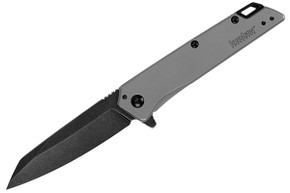
The Kershaw Skyline is a minimalist manual flipper with a 3.125 inch 14C28N blade and G10 scales. At 2.5 ounces, it is perfect for summer carry. Made in the USA and priced between $50 and $65.
For restrictive jurisdictions, the Kershaw Launch 4 features a 1.9 inch CPM 154 blade and strong deployment kick. Made in the USA and priced between $90 and $110, this model meets California's blade length requirements.
The Kershaw Bel Air, new for 2024, features CPM MagnaCut super steel, KVT ball bearings, and a DuraLock crossbar mechanism. This American-made folder punches above its $140 to $160 price point.
For hard use, the Blur remains unbeaten. For office carry, consider the Leek or Iridium. For push-button deployment, any Launch series model delivers. Kershaw's EDC lineup offers quality across every price point.
What is the Kershaw Launch Series?
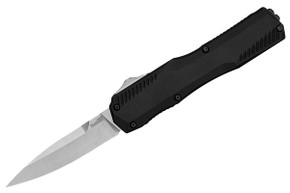
The Launch series is Kershaw's premium push-button deployed knife lineup. Every Launch model features CPM 154 stainless steel blades, anodized aluminum handles, button deployment mechanisms, and is made in the USA in Tualatin, Oregon.
The Launch 1 is the original full-size model, with a 3.4 inch drop-point blade, BlackWash finish, and aggressive deployment. It remains popular among collectors and users. The Launch 4 was designed for California compliance with its 1.9 inch blade, making this compact powerhouse legal in most jurisdictions. The Launch 9 scales down the Launch 2 design to a sub-2 inch blade for maximum legal carry while maintaining strong deployment. The Launch 11 stands out as a lightweight option with handle cutouts and bronze titanium accents on its 3.2 inch blade. The Launch 19 is the high end of the series, featuring an earth-brown G10 and aluminum combo handle, two-tone Cerakote/satin blade finish, and a finger choil for detailed work.
All Launch knives use button-lock mechanisms and include reversible pocket clips. The series balances refined fit and finish with real working performance. Prices typically range from $90 to $180.
What is the Difference Between Kershaw Assisted Opening and Push-Button Opening Knives?
SpeedSafe Assisted Opening knives require the user to manually push the blade via thumb stud or flipper. A torsion spring assists in completing the opening after manual initiation. These are classified as manual-opening knives under federal law and are legal in most US jurisdictions. Examples include the Leek, Blur, Clash, Knockout, and most Kershaw folders.
Push-button opening knives, such as the Launch series, deploy via a button. Spring deployment requires no manual blade contact; you press a button on the handle, and the blade deploys. Examples include all Launch series models and select CQC models.
This distinction matters because SpeedSafe-assisted-opening knives are legal to own and carry in most US states, since they require the user to manually initiate blade deployment by contacting the blade. Push-button opening knives face significant legal restrictions.