 Free Shipping
 Made In USA

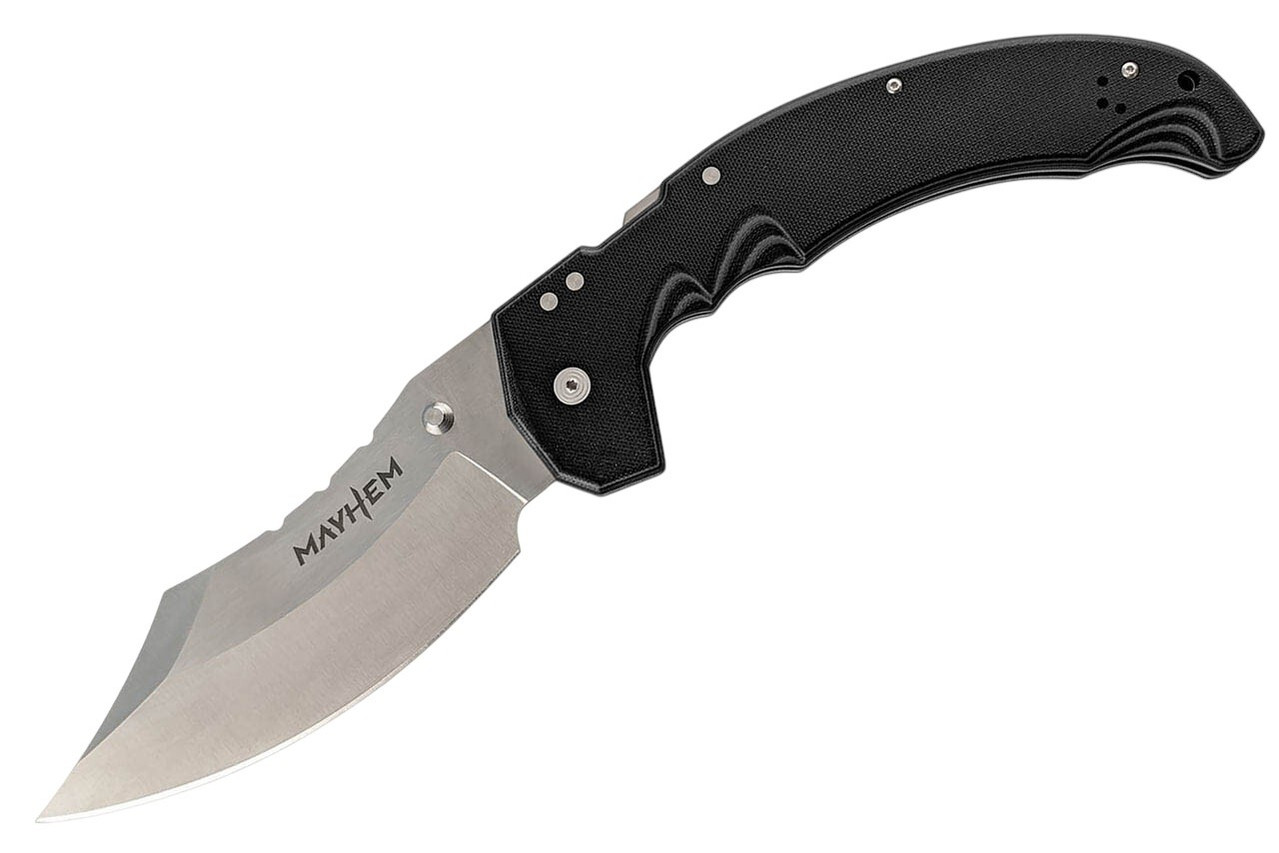
The Atlas Lock arrived in 2022 as Cold Steel's answer to a simple question: how do you improve on the Tri-Ad? Their solution keeps the core philosophy—a back lock reinforced by stop pins to handle extreme force—while redesigning the mechanism for even greater strength and smoother operation.
The key difference is the dual-pin architecture. Where the Tri-Ad uses a single stop pin between the lock bar and blade tang, the Atlas employs a sliding lock bar that engages two pins simultaneously. This doubles the locking surface area and distributes force across multiple contact points. In Cold Steel's testing, the Atlas handled more weight and absorbed more shock in spine whack and overstrike tests than the already legendary Tri-Ad.
The closed-top design contributes to the improved performance. The lock bar sits deeper in the handle with more material surrounding the mechanism, creating a more rigid structure that resists deflection under load. Users report a noticeably snappier deployment compared to Tri-Ad equipped models, with solid lockup that inspires immediate confidence.
The Atlas debuted on the Engage (originally called the Drifter), marking Cold Steel's post-acquisition push into refined EDC designs. The mechanism has since spread to other models in their lineup, including the Swift series with assisted opening.
One consideration: the deeper lock bar engagement can occasionally catch skin during closure if you're not paying attention to finger placement. It's a minor tradeoff for the security improvement, and most users adapt their grip naturally after a few uses.
For users who thought the Tri-Ad couldn't be improved, the Atlas proves otherwise.
Free Shipping Made In USA