 Free Shipping
 Made In USA

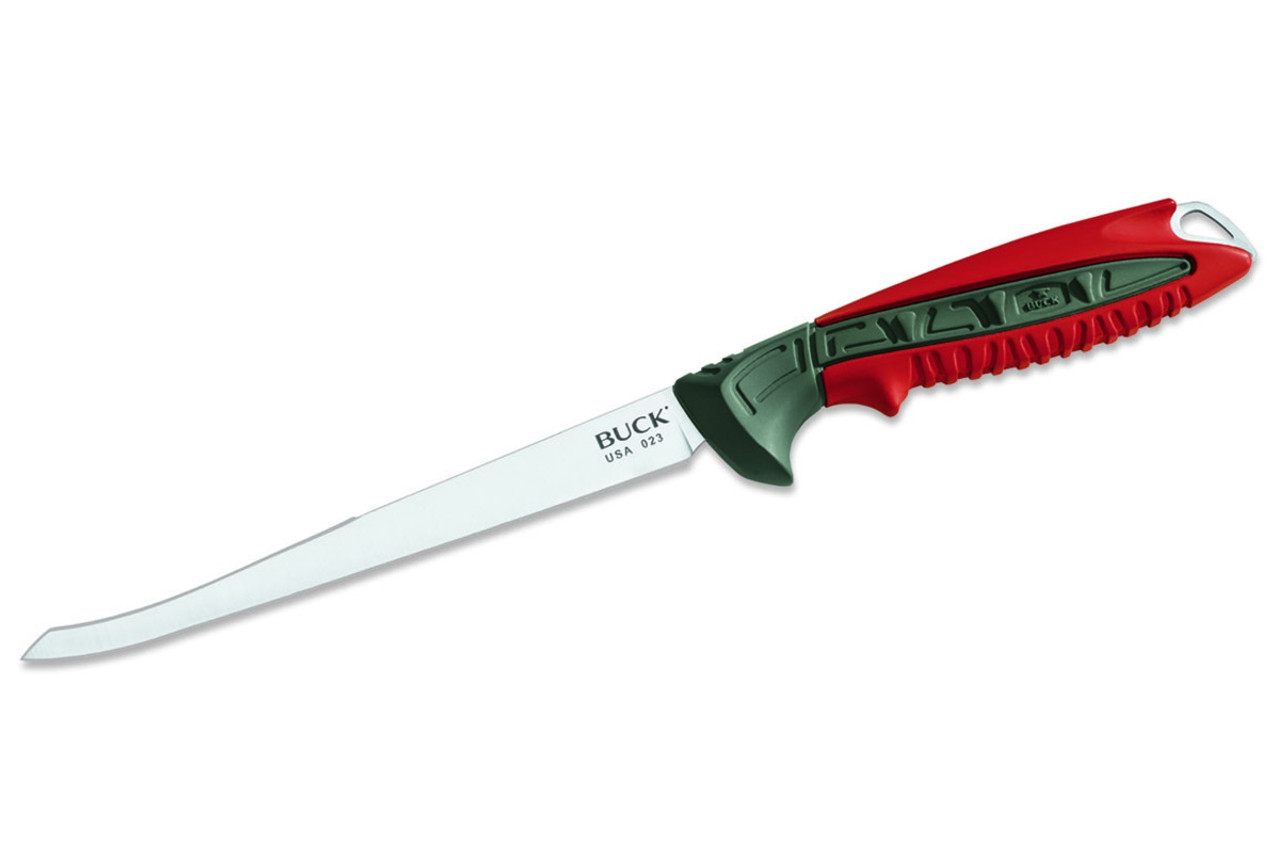
Buck's fillet knife lineup splits between the Hookset series for dedicated saltwater and freshwater anglers and the Silver Creek line for versatility and portability. Both series are built around the two factors that matter at the cleaning table: blade flexibility for working along the spine and rib cage, and corrosion resistance for gear that lives around water.
The Hookset series runs flexible, tapered blades in titanium-coated 5Cr15MoV, with glass-reinforced handles wrapped in TPE rubber for an all-weather grip. The freshwater 144 and 146 cover 6" and 9" blade lengths, while the Salt Water 145 and 147 match those sizes with blue and gray handles and added corrosion protection for ocean duty. The 149 Hookset Breaker stretches to a 10" semi-flexible blade for breaking down large saltwater fish, and the 150 Hookset Cleaver brings a 6.375" chopping blade to head removal and portioning tasks that would abuse a flexible fillet edge. Every Hookset ships with an injection-molded sheath with an integrated belt loop.
The Silver Creek series covers both carry styles. The 220 Folding Fillet locks a 6.5" flexible blade into a rubberized handle for tackle-box storage, while the fixed 223 and 225 run 6.375" and 9.625" blades for medium fish through big lake trout and salmon. All three use titanium-coated 420J2, stainless steel safety guards, and the same non-slip TPE grip that keeps the knife planted when hands are wet and slimed.
A flexible fillet edge is easiest to keep true with a guided sharpening system, and Buck's own EdgeTek diamond sharpeners handle touch-ups between trips. Like everything in the Buck Knives catalog, the fillet lineup is backed by the Forever Warranty.
Free Shipping Made In USA