 Free Shipping
 Made In USA

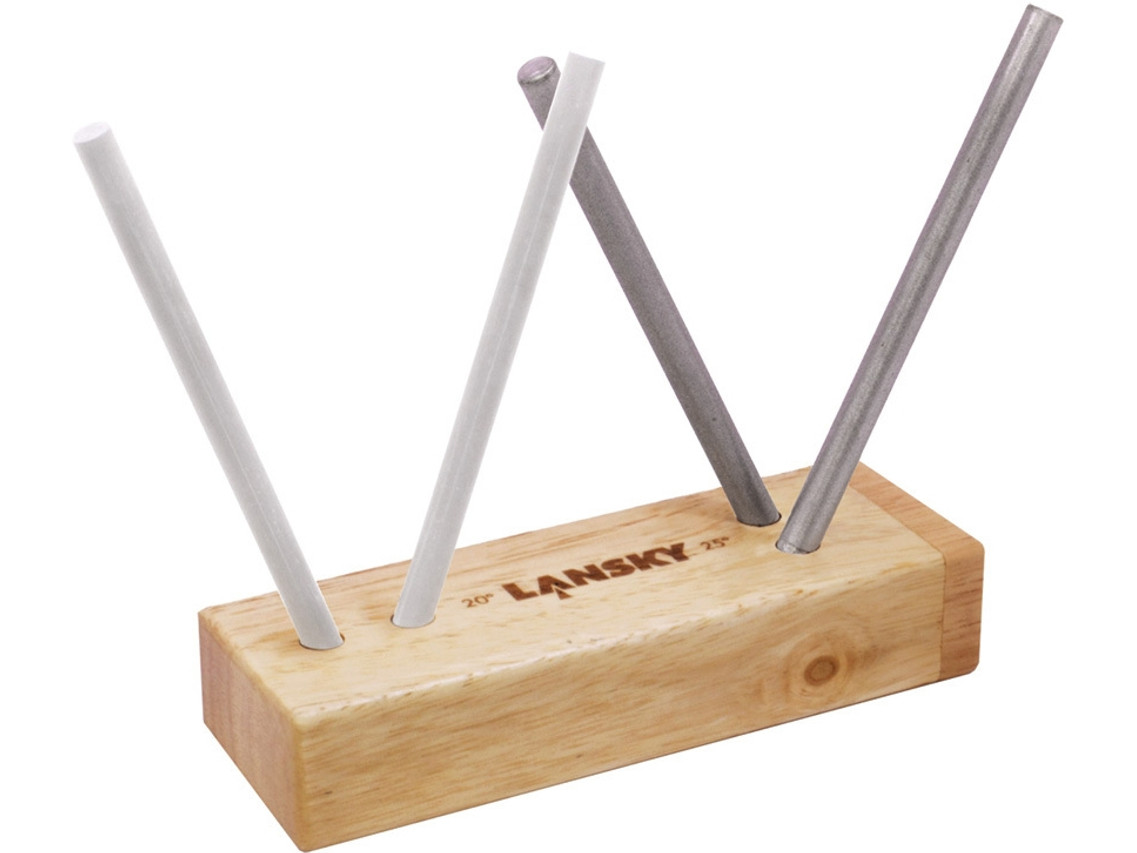
Ceramic sharpening rods sit in a specific niche of the sharpening workflow — fine abrasive surfaces designed for quick edge maintenance between full sharpening sessions, not for setting a new bevel or repairing damage. DLT Trading carries ceramic rods from Spyderco and other leading manufacturers in the grit ranges and formats that serious knife owners actually use, from compact field rods to full-size bench rods built for kitchen and processing work.
Ceramic rods are typically alumina ceramic fired into a dense, hard abrasive rod rated in the 1000 to 2200 grit range depending on the specific material. That fine abrasive action does two things at once — it removes a tiny amount of material from the apex while simultaneously realigning the microscopic edge deformations that accumulate during normal cutting. The result is a touched-up working edge that cuts cleanly again without the time, setup, or material removal of a full sharpening stone session. White alumina ceramic is the standard grit level for general-purpose maintenance, while denser black ceramic runs finer and handles harder modern blade steels where standard ceramics can glaze or load quickly. This is a fundamentally different tool than a honing steel — honing steels are smooth metal rods that realign the edge without abrading, making them pure maintenance tools for kitchen and processing knives. Ceramic rods actually cut, which means they can restore an edge that a honing steel cannot.
Compact ceramic rods pack into a sheath pocket or pack and ride with a working knife for quick touch-ups in the field — the right tool for keeping a hunting or EDC blade in service across a long day without pulling out a full sharpening setup. Full-size bench rods, typically 9 to 12 inches, give you the stroke length needed for longer kitchen blades and processing knives where honing through the entire cutting edge matters. System ceramic rods like the Spyderco Sharpmaker tri-angle setup bridge the gap between freehand ceramic work and guided sharpening, using fixed-angle slots to hold two ceramic rods at a consistent sharpening angle while you draw the blade through — a simple, repeatable setup that produces reliable results on EDC and kitchen blades. Pair any ceramic rod with a loaded leather strop as the final finishing step to remove the light burr that ceramic work can leave behind.
Free Shipping Made In USA