 Free Shipping
 Made In USA

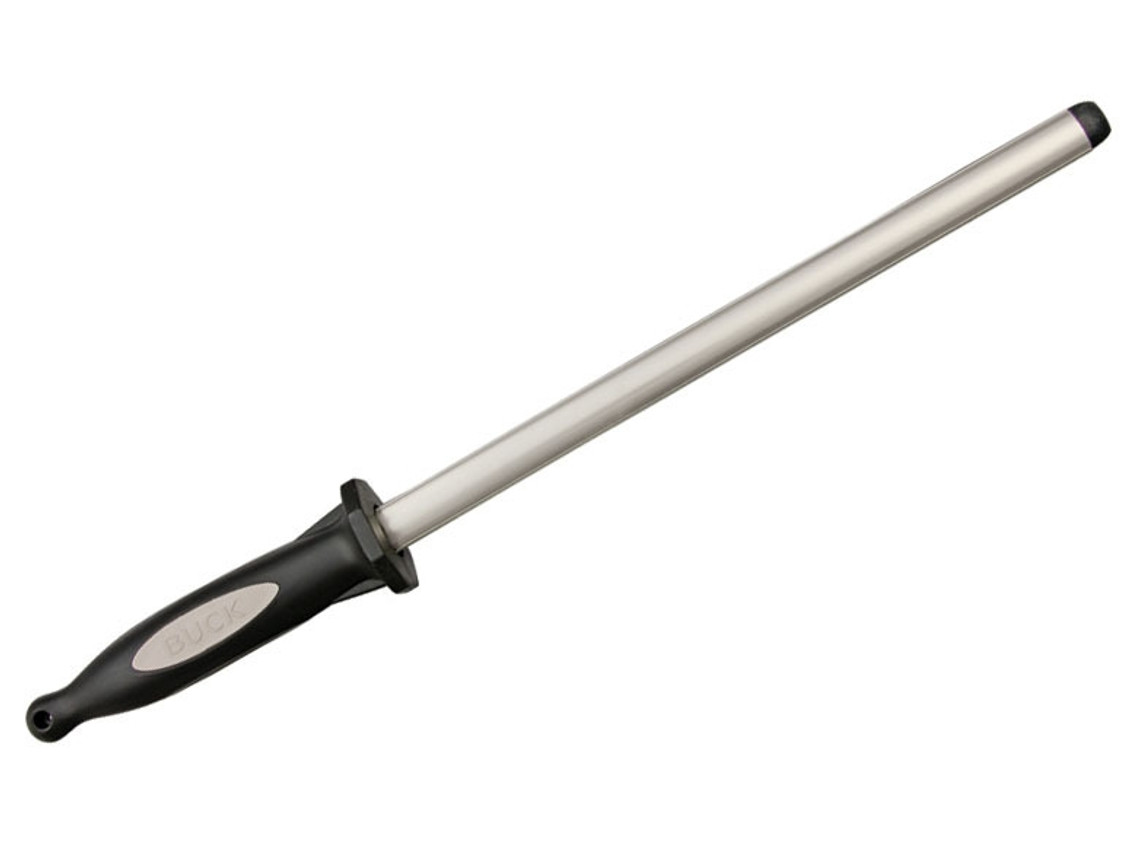
Honing steels are the maintenance tool that keeps a sharp knife sharp between full sharpening sessions. DLT Trading carries honing steels and butcher steels built for working kitchens, processing shops, and serious home cooks who understand that a knife's edge bends and rolls during normal use — and that realigning those microscopic deformations is the difference between a knife that cuts cleanly through a full prep session and one that progressively struggles.
A smooth honing steel is a polished metal rod that realigns the apex of a cutting edge without removing material. During normal cutting, the thin cutting edge of any knife bends microscopically as it contacts cutting boards, bones, and dense food — what feels like a "dull" blade is often just a rolled edge, not worn steel. A few light passes at the correct angle along a honing steel straightens those rolled edge sections back into alignment, restoring the clean cutting action without the material removal that full sharpening requires. Ridged and cut-pattern honing steels work slightly differently — the longitudinal grooves in the steel surface provide a mild abrasive action that removes tiny amounts of material in addition to realigning the edge. Diamond-coated steels take that abrasive function further, using embedded diamond particles to cut steel while honing. This category of tool is distinct from ceramic sharpening rods, which use dense alumina ceramic as a true fine-grit abrasive — ceramics cut steel, while smooth honing steels primarily realign it. Both tools earn a place in a complete knife maintenance setup, but they solve different problems.
Butcher steels are the heavier, longer, more robust version of the kitchen honing steel — built for the demands of meat processing where knives see constant contact with bone, cartilage, and dense muscle tissue. Professional butcher steels typically run 12 inches or longer to accommodate the full stroke length of processing knives like breaking knives, cimeters, and boning knives, and they feature heavier construction to withstand daily use in a working environment. Smooth butcher steels maintain fine edges on finishing and slicing work, while regular-cut and coarse-cut patterns handle the heavier realignment and light sharpening that breaking and primal work demands. For home cooks and lighter-duty kitchen use, a standard 9 to 10-inch honing steel paired with periodic work on sharpening stones or a guided sharpening system covers most maintenance needs. For serrated and specialty blades that honing steels cannot service effectively, DLT also carries pull-through sharpeners designed for those specific blade geometries.
Free Shipping Made In USA