
Collections
 Free Shipping
 Made In USA
DLT Trading carries knife sharpening supplies built around the systems and methods that serious knife owners actually use — from precision guided sharpeners to hand-held field options and everything in between. Whether you're maintaining a convex grind, reprofiling a V-ground folder, or putting a working edge back on a kitchen blade, the right sharpening setup makes the difference between an edge that cuts and one that performs.
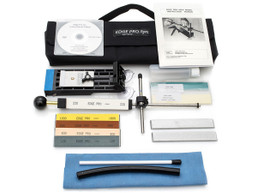
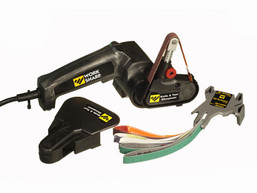
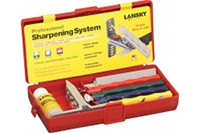
Guided systems like KME, Edge Pro, and Wicked Edge take angle control out of your hands and deliver repeatable results across any blade geometry. These are the sharpening systems that let you set a precise bevel angle and hold it consistently from heel to tip — the single biggest factor in a clean, lasting edge. For users who prefer powered options, Work Sharp electric and belt-driven sharpeners handle everything from quick touch-ups to full reprofiles with interchangeable abrasive belts. Lansky guided systems offer an accessible entry point with a proven clamping design that scales up with additional stone grits as your skills develop.
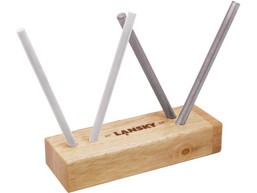
Freehand sharpening starts with the right stone. DLT stocks sharpening stones across the full grit spectrum — coarse stones for damaged edges and reprofiling work, medium grits for establishing clean bevels, and fine stones for finishing and polishing. Benchstones provide a stable platform for longer blades and heavier stock removal. Ceramic rods serve a different role entirely — they're maintenance tools designed for quick edge touch-ups between full sharpening sessions, and they're the go-to field option for keeping a working knife in service without pulling out a full system.
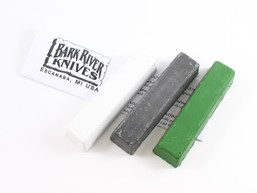
Stropping is where a sharp edge becomes a refined edge. DLT produces leather strops and hones in-house, from ultra-portable field sizes up to premium horsehide 3" x 12" strops built for dedicated sharpening stations. Pair any strop with compound bars or CBN (Cubic Boron Nitride) emulsions to access a full range of finishing grits. CBN compounds are particularly effective on high-carbide steels like S90V, M390, and MagnaCut, where traditional abrasives can struggle to break down carbide structures efficiently. The result is a polished apex that cuts cleanly and holds its edge longer between maintenance cycles.
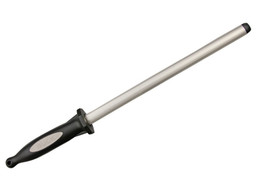
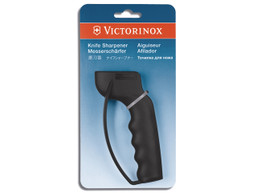
Convex-ground knives require a different sharpening approach than flat or hollow grinds. Compound bars, strops, and hones designed for convex geometry maintain the curved bevel profile without flattening the edge into a V-grind. For serrated and specialty blades, pull-through sharpeners and tapered rods reach the individual gullets that flat stones can't access. Butcher steels handle honing and realignment on larger kitchen and processing blades, where maintaining the existing edge angle matters more than removing material.










 Free Shipping Made In USA