 Free Shipping
 Made In USA

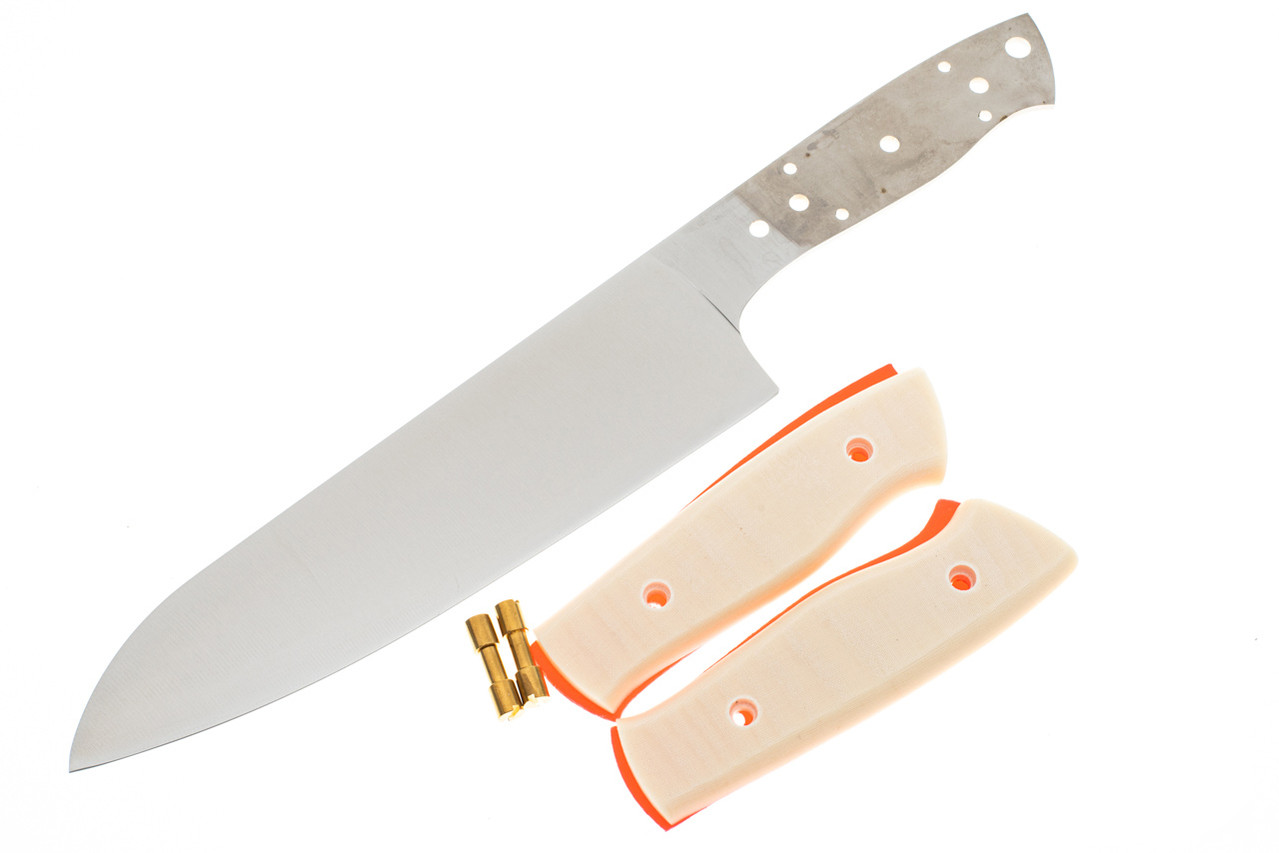
A knife blank is where the build starts, and the blank you pick dictates every decision after it. DLT Trading stocks bare blade blanks and complete knife kits from Helle, Condor, and Brisa, covering stick tang Scandinavian patterns, broad tang bushcraft profiles, and kitchen blades. The steel arrives hardened, ground, and finished. What is left is the handle, and that is what makes the knife yours.
The difference comes down to what ships in the box. A bare blade blank is finished steel and nothing else, so you source handle material, pin stock, and adhesive on your own terms. A complete knife kit arrives with scales already sized to the tang and the hardware to close the build. Blanks let you work in stag, burl, or stabilized wood you have been saving. Kits take the guesswork out of fitting.
Helle grinds its blanks in Holmedal, Norway, setting a hard core between softer outer layers. The core holds a keen edge while the flanking layers absorb shock and shrug off corrosion. Nearly all carry a stick tang and a true Scandi grind, which is why they remain the default starting point for puukko and bushcraft builds. The Temagami, Eggen, and Harding blanks cover most field work, and finished versions sit in the Helle lineup.
The Condor blanks come off the same line as the finished knives in high carbon steel, with the Bushlore, Woodlaw, and Kephart profiles established and the tang drilled for pins. Brisa works from Finnish patterns and ships its Kephart 115 and chef's knife kits with curly birch or micarta cut to the tang, which makes them a sound first build for anyone who has not fitted scales.
Tang style decides your method. A stick tang wants a drilled and burned handle block, a ferrule at the throat, and a slow cure epoxy that gives you time to seat everything square. A broad tang takes matched scales and pin stock cut proud for peening, then shaping once the epoxy cures. Protect the edge while you rough the handle, then put a fresh edge on with a sharpening setup before the knife sees work. Blanks bound for the woods belong alongside the bushcraft knives they were patterned after.
Free Shipping Made In USA