 Free Shipping
 Made In USA

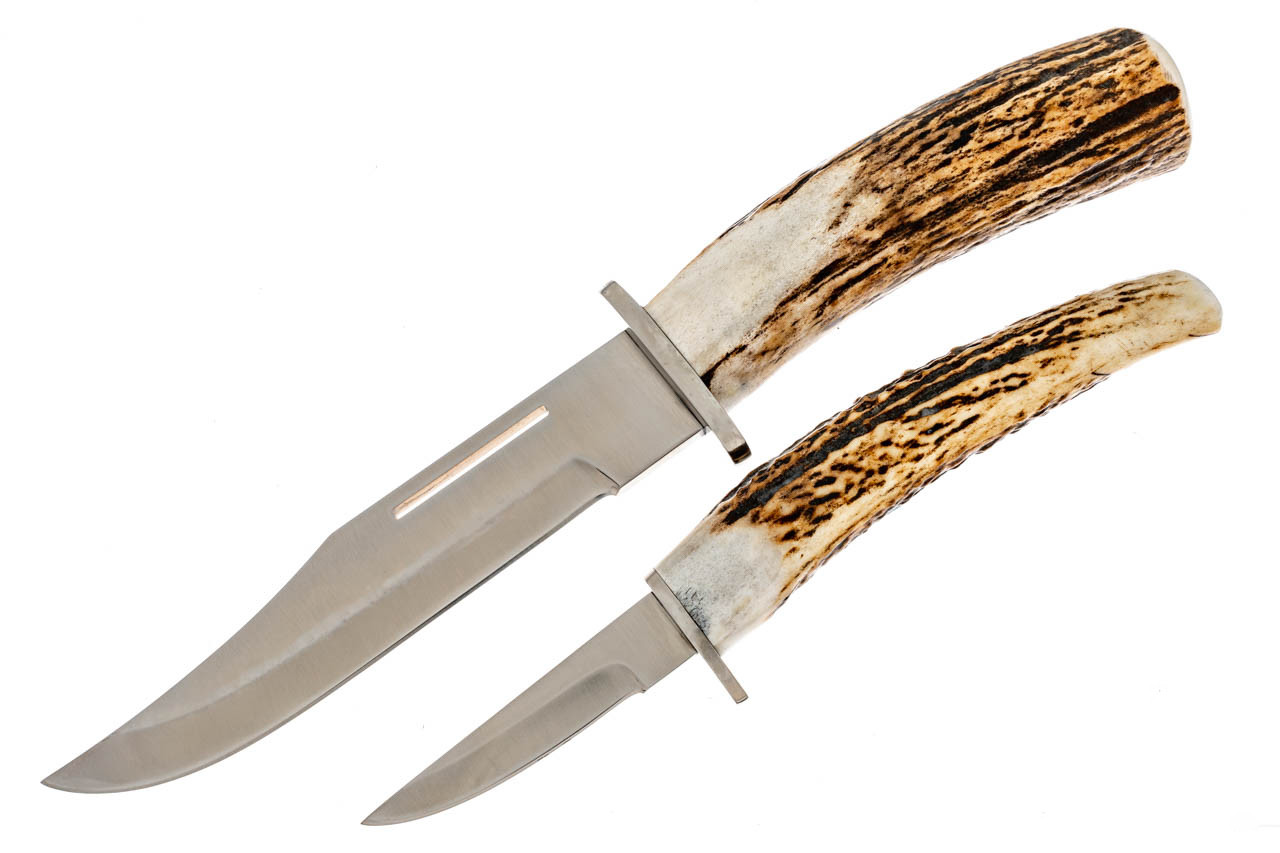
Natural handle material has covered knife tangs for as long as people have carried knives, and nothing manufactured has replaced it. DLT Trading stocks antler, stag, and bone handled knives from Case, Silver Stag, and Knives of Alaska, spanning traditional slipjoints, hunting fixed blades, and bowies. Every handle in this category came off an animal, which means no two knives here are identical.
Stag is antler cut into slabs, sanded flat on the mating surface, and left with its natural bark on the show side. Sambar stag, taken from the Indian sambar deer, is the material collectors chase for its dense marrow and deep popcorn texture. Export has been restricted for decades, so genuine sambar carries a premium and appears in limited runs rather than standing inventory. Case builds its stag patterns in small batches, and those knives sit within the wider Case lineup.
Silver Stag works almost entirely in North American elk antler, using both crown sections and split slabs. Elk runs larger and more porous than whitetail, which fills the hand well on a skinner or a camp blade. Deer antler is denser and tighter grained, better suited to slimmer patterns. A crown handle keeps the burr at the butt end intact, giving you a natural flare that resists slipping when your hands are wet, which is why so many hunting knives are built on them.
Bone is typically beef shin, dyed and then jigged with a cut pattern pressed into the surface for grip and depth. Jigging is where a maker shows its hand, and the pattern names run deep in traditional knives. Case also produces BoneStag, which is bone worked to carry stag texture at a fraction of what genuine sambar costs.
Color and texture vary between lots because the raw stock varies. Antler and bone both darken with handling as oil from your hands works into the surface, which most owners consider the point. Keep them dry and out of a damp sheath for storage, and avoid leaving a knife in a hot vehicle, since heat cycling can open hairline cracks along the grain. For how these materials stack up against micarta, G-10, and the rest of the field, our handle materials guide covers the full spread.
Free Shipping Made In USA