 Free Shipping
 Made In USA

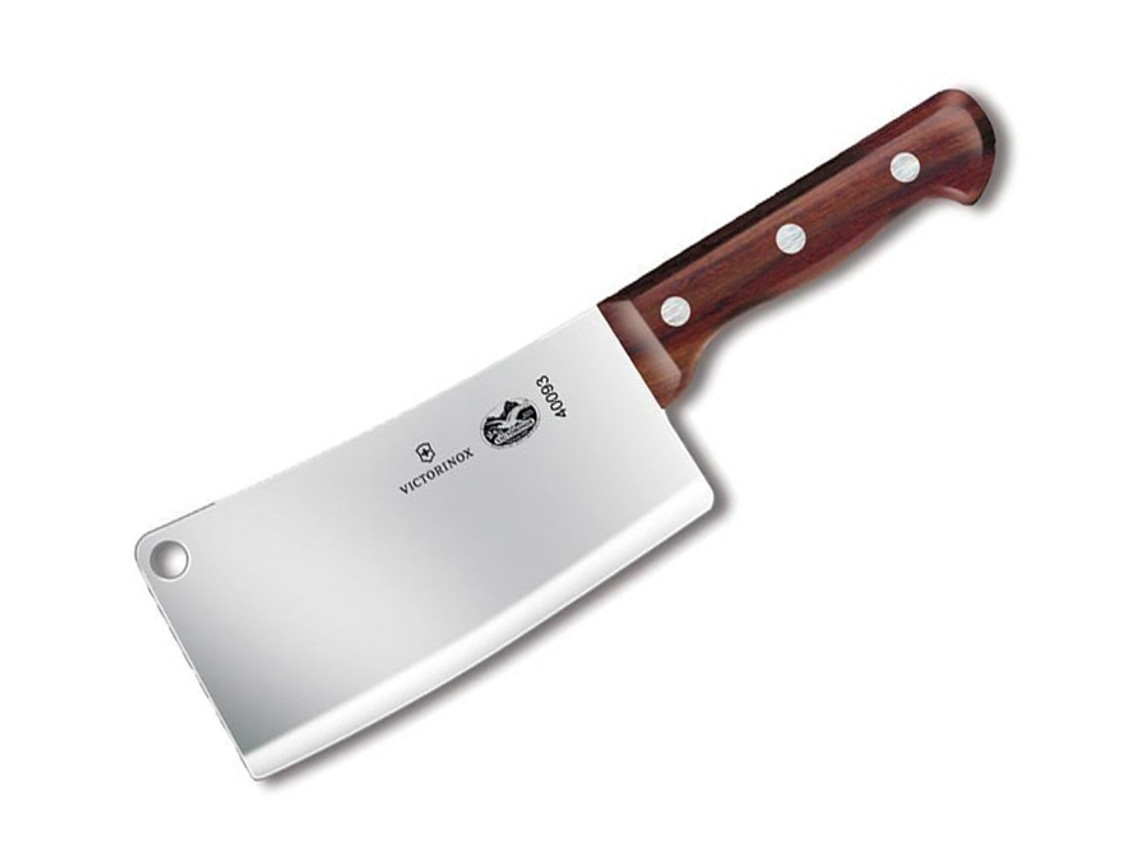
A cleaver trades the finesse of a chef knife for mass, and the mass is the tool. The broad blade and forward balance let you chop through poultry joints, portion primal cuts, and split soft bone with controlled force that would roll the edge on a standard chef knife. DLT Trading carries professional Victorinox meat cleavers for the kitchen alongside camp cleavers from ESEE and TOPS built for the fire pit instead of the cutting board.
A true meat cleaver is built unlike anything else in the knife block. The spine runs thick, the edge is ground tough rather than surgically thin, and the weight sits forward so the blade does the work your arm would otherwise do. Victorinox restaurant cleavers pair that geometry with Swiss ground stainless in rosewood and walnut handled versions that shrug off shift after shift of commercial use. A good cleaver also changes how you shop. Buy whole poultry and primal cuts at better prices, break them down yourself, and get fresher results out of the same grocery run.
Splitting poultry through the joints, chopping soft bone for stock, portioning ribs and large roasts, and cracking lobster and crab shells are the core jobs. The flat of the blade earns its keep too, crushing garlic and lemongrass in one strike and scooping a board full of prep straight into the pan. What a meat cleaver is not for is hardwood, frozen food, and heavy beef femurs, which belong to a saw. Give it everything softer and the edge will outlast every other knife you own.
The Chinese cleaver looks like a butcher tool and works like a chef knife, and confusing the two is the most common mistake in the category. Its blade is thin, light, and ground for push cuts through vegetables and boneless meat, which is why it is often sold as a vegetable cleaver. It is never a bone chopper. The Victorinox 8 by 3 Chinese cleaver with walnut handle covers that slicing role in our lineup, and our kitchen knife buying guide walks through where each pattern fits in a working kitchen.
Match the edge to the job. A bone cleaver wants a durable edge around 25 degrees per side, touched up on a coarse stone or a steel, and chasing a razor polish on it wastes the tool. A Chinese cleaver sharpens exactly like a chef knife, thin and keen, because it only ever meets the board. Either way the maintenance is minutes, and a packable sharpening setup keeps both honest.
The other half of the case lives outdoors. The ESEE CL1 Expat cleaver runs 1095 carbon steel with G10 scales and handles camp kitchen duty, kindling, and everything a small chopper should, while the TOPS El Chappo packs cleaver geometry into a compact fixed blade that rides on a belt. These sit closer to a hatchet than a santoku, and around a fire that is exactly the point.
Free Shipping Made In USA