
Collections
 Free Shipping
 Made In USA
ESEE builds the fixed blade you hand somebody who is actually going into the woods. The company grew out of Randall's Adventure & Training, the survival school Jeff Randall and Mike Perrin ran under contract with the Peruvian Air Force's jungle program, and the name carries the Spanish initials of that survival, escape, and evasion work. These are knives designed by people who taught the skills, not by a marketing department.
Nearly the whole line runs 1095 carbon steel taken to 55 to 57 Rc through Rowen Manufacturing's proprietary heat treatment, a hardness chosen on purpose. It gives up a little edge retention against the super steels to buy the toughness that survives batoning, chopping, and prying, and it sharpens back on whatever stone you have in the field. Full tang construction runs tip to pommel on every model, and several are offered in CPM S35VN when you want stainless. Both steels sit in context in our knife steel comparison guide.
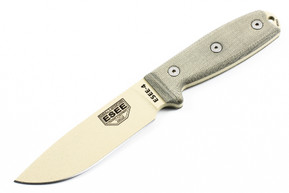
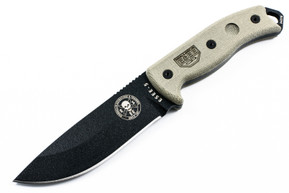
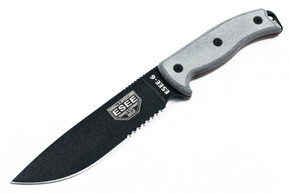
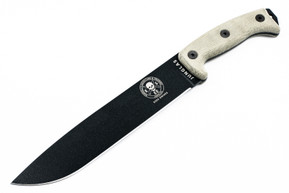
The numbered series is one design philosophy at four sizes. The ESEE 3 is the 3.88 inch everyday field knife, light enough for a duty belt. The ESEE 4 adds blade and thickness for the pack, the middle ground most first-time buyers should start with. The ESEE 5 is the quarter inch thick SERE design, built to the downed-pilot brief and nearly impossible to hurt, and the ESEE 6 stretches the same spine to 5.75 inches for bushcraft and big game work. Every one ships with a Kydex sheath, and the additional models, the Junglas line among them, pick up where the numbers leave off.
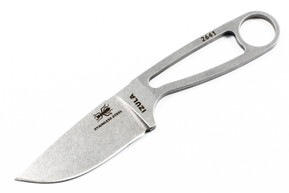
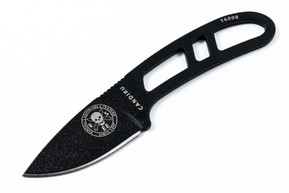
The Izula is the famous one, a skeletonized neck knife named for a Peruvian bullet ant, small enough to disappear and tough enough to do real work. The Candiru shrinks the idea further into the lightest carry ESEE makes. Scales, sheaths, and MOLLE hardware for the whole line live in ESEE accessories.
If an ESEE blade breaks, the company repairs or replaces it without questioning the claim, no receipt, no registration, and the coverage follows the knife through every owner it ever has. It covers breakage rather than rust, wear, or lost sheaths, and throwing is the one stated exception, since steel at this hardness is not made to be thrown. It is the plainest warranty in the industry, and it says everything about how these knives are built.

 Free Shipping Made In USA