
Collections
 Free Shipping
 Made In USA
Kitchen knives get used harder than any other blade most people own, and the gap between a well-built one and a supermarket set shows up in the first week of real cooking. It comes down to thin grinds that part food instead of wedging it, heat treatment that holds an edge through a week of prep, and a handle that stays comfortable through an hour of repetitive work.
The selection here runs Japanese and Western construction from cutlery houses and from knife makers who apply the same steels and grinds to kitchen work that they put into their folders and fixed blades, including Microtech kitchen knives in M390MK, Spyderco kitchen knives, and Benchmade kitchen knives. New to the category? The best selling kitchen knives are the fastest place to start.
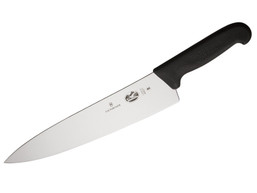
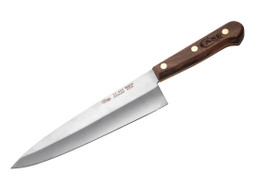
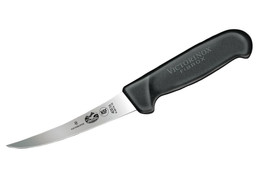
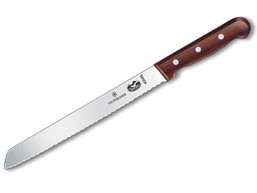
Every cut in the kitchen has a blade built for it. Chef knives and santoku knives carry the daily prep load, and the difference between them is technique rather than quality: a chef knife has belly for rocking cuts, while a santoku runs flatter and rewards a straight push cut. Kitchen utility knives bridge the gap, and paring knives take over for in-hand detail work. Boning knives run narrow to separate meat from bone, and fillet knives push that flex further for skinning fish, with Finnish Marttiini among the classics. Butcher knives and cleavers handle the heavy end, bread knives use deep serrations to cut crust without crushing the crumb, and carving knives and steak knives finish the job at service and at the table.
Western knives generally run thicker stock and softer steel in the mid to high fifties Rockwell, with a curved belly built for rocking cuts. They tolerate lateral stress and bone contact, which is why Victorinox kitchen knives have held their place on professional lines for decades, and Kershaw kitchen knives follow the same German-steel approach. Japanese knives run harder, often into the low sixties, with thinner geometry and flatter profiles suited to push cutting; the edge is keener and lasts longer, but it asks for cleaner technique. Shun kitchen knives from Seki anchor that side of the catalog. Makers increasingly split the difference, with Bradford grinding MagnaCut chef knives in the USA, Demko offering Japanese-made VG10 San Mai gyutos, and Fallkniven kitchen knives bringing Swedish design to the counter.
Steel priorities shift in the kitchen. Thin geometry and constant washing push corrosion resistance and fine grain ahead of raw toughness, which is why VG-10, AEB-L, and MagnaCut show up as often as they do; our comparison of every major knife steel puts the numbers side by side. Honing and sharpening remain the most neglected part of kitchen work: honing steels realign an edge between uses, and our sharpening stones, systems, and strops restore geometry once the blade has genuinely dulled. For a fuller walkthrough, read the kitchen knife buying and care guide.
Cooks building a kitchen from nothing should look at kitchen knife sets, which bundle the core blade types and often include a block or roll. Pair them with an Epicurean cutting board that is easy on an edge and the rest of our kitchen utensils, and check kitchen knives on sale before you commit.






 Free Shipping Made In USA