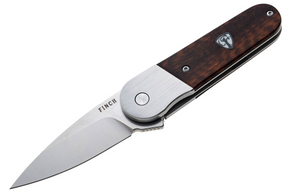
Finch Knife Company designs EDC folding knives from their Stilwell, Kansas headquarters, launched in 2019 by lifelong friends Spencer Marquardt and Steve Laughlin. The brand's catalog includes over 20 models using American 154CM stainless steel, Austrian N690, Swedish Sandvik 14C28N, and high-end M390 powder metallurgy steel. The signature Runtly, introduced in 2020 as Finch's first production knife, features a 2.25 inch wharncliffe blade in 154CM steel with G10 handles and liner lock construction. The Runtly XL increases blade length to 3 inches with M390 steel, titanium bolsters, and an integrated liner bolster lock. Blade finishes include stonewash, satin, and black PVD coatings across drop point, clip point, sheepsfoot, and cleaver blade shapes.
Ceramic Ball Bearing Flipper Mechanisms
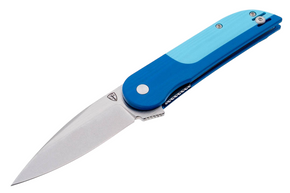
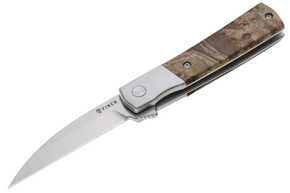
Finch's modern flipper knives use ceramic ball bearings for smooth blade opening and are manufactured by Bestech with precision CNC machining. Models like the Chernobyl Ant and Halo offer both flipper tabs and dual nail nicks for versatile opening, while the Road Runner features button lock deployment. Liner lock designs dominate the Sport series, with titanium pocket clips for tip-up carry. Handle materials include textured G10 in various colors, woven and shredded carbon fiber, canvas and linen micarta, and glow-in-the-dark raffir resin. The knives range from compact 5.5 inch EDC folders to 7.5 inch larger variants weighing 3 to 4.5 ounces.
Traditional Slipjoint and Barlow Patterns
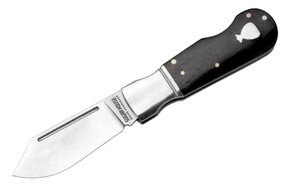
Finch bridges classic American pocket knife designs with contemporary materials through models like the Model 1929 and Model 1934 Barlow-style folders. These traditional-inspired knives feature stainless steel bolsters with natural handle scale inlays including jigged bone, cocobolo wood, ironwood, and olivewood. The Peacemaker slipjoint uses M390 steel blades with spear point and sheepsfoot configurations, eliminating modern locking mechanisms while maintaining traditional half-stop spring tension. The Buffalo Tooth design incorporates titanium frames with exotic wood overlays and frame lock construction, merging heritage aesthetics with modern engineering. These Classic series knives pay homage to vintage patterns established in Grand Teton National Park's founding era while incorporating ceramic bearing pivots and titanium clips.
G10 and Micarta Handle Construction
Handle materials across Finch's lineup emphasize grip texture and visual appeal through color combinations and material layering. G10 scales come in solid colors like ghost jade, military blue with yellow, smokey gray, and black, with raised texturing for secure handling. Canvas micarta options include tobacco natural and tree bark patterns, while exotic materials include blue swirl carbon fiber, gold glitter resin infusions, and red shredded carbon fiber. Natural materials include mkuruti wood, snakewood, cocobolo, and stabilized burls. Handle thicknesses typically measure 0.50 to 0.55 inches with ergonomic contouring and lanyard holes in backspacers. The brand's commitment to vintage outdoor aesthetics shows in fishing lure-inspired colorways and retro sporting goods references in handle designs.
Modern EDC and Vintage-Inspired Pocket Knives
Finch Knife Company releases new models annually, expanding from 2020's debut into collections like the Undertaker, Hellfire, Pipeline, Widowmaker, Stray Dog, Avalanche, and Cherry Bomb. The brand distinguishes between Sport series modern flippers with bold geometries and Classic series traditional patterns with heritage styling. Blade lengths range from 2.25 inch compact EDC sizes to 3.4 inch larger work knives, with closed lengths between 3.25 and 4.72 inches. The knives combine nostalgic design elements from 1970s and 1980s outdoor culture with current manufacturing technology, appealing to collectors who value both functionality and a connection to vintage fishing, camping, and sporting traditions.