 Free Shipping
 Made In USA

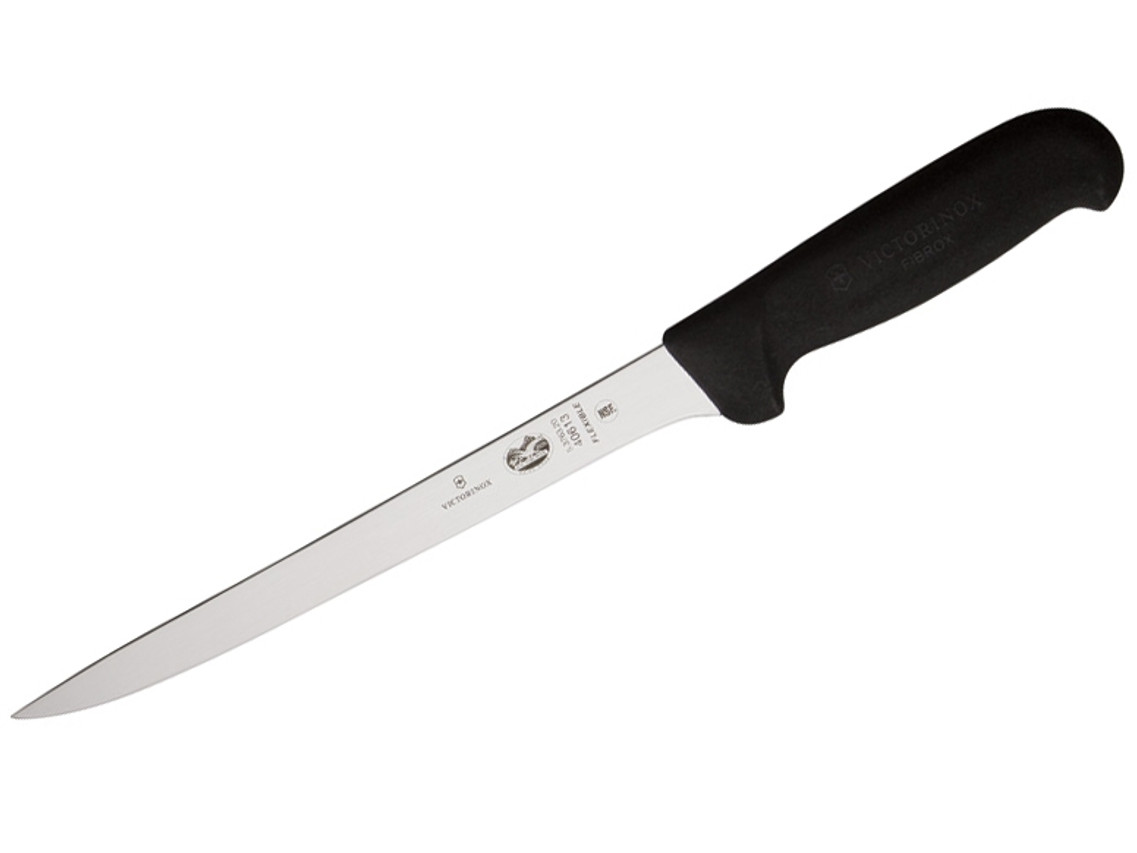
Fillet knives are built for one job, separating flesh from skin and bone with minimal waste, and the defining feature is flex. A fillet blade bends along its length to follow the rib cage and backbone, which is the difference between a clean fillet and one that leaves meat behind. We carry fish fillet knives from White River, Victorinox, Marttiini, Bubba Blade, Bradford, and more, from panfish blades to saltwater giants.
Blade length maps to species. Blades around 6 inches give tight control on crappie and bluegill. The 7 to 9 inch middle, like the 8 inch White River Pro Fillet, covers walleye, bass, and trout. A 10 inch blade handles pike and salmon, and the 13.5 and 18 inch Bubba Blade fillets are built for big saltwater fish.
They look alike but do different work. A fillet knife flexes to ride along bones through soft fish. A boning knife keeps a stiffer spine to work around joints and connective tissue on meat, where flex costs control. Use a boning knife on fish and you leave meat on the frame.
Everything here leans corrosion resistant because a fillet knife lives in water, blood, and salt. Victorinox and Buck run proven stainless that sharpens fast mid session, White River offers 440C and CPM S35VN, Bradford uses AEB-L, and the Benchmade Fishcrafter moves to CPM MagnaCut. Bubba Blade adds a titanium nitride coating, and Marttiini's Martef line wears a friction reducing coating. Our comparison of every major knife steel covers them all.
Keep the angle low and the touch light. Fillet knives run thin edges, and a few passes on a fine stone or ceramic rod mid cooler beats a full resharpening at home. Support the flexible blade against the stone rather than sharpening freehand in the air, then finish with a strop. Packable knife sharpening supplies earn a spot in the boat bag.
Marttiini brings Finnish fillet heritage across the Classic, Martef, and Superflex lines, and Buck Silver Creek models and the Bubba Blade folding fillet pack small for the tackle box. The Gerber Ceviche and two Shun fillet knives bridge into our kitchen knives for anglers who finish the job indoors.
Free Shipping Made In USA