 Free Shipping
 Made In USA

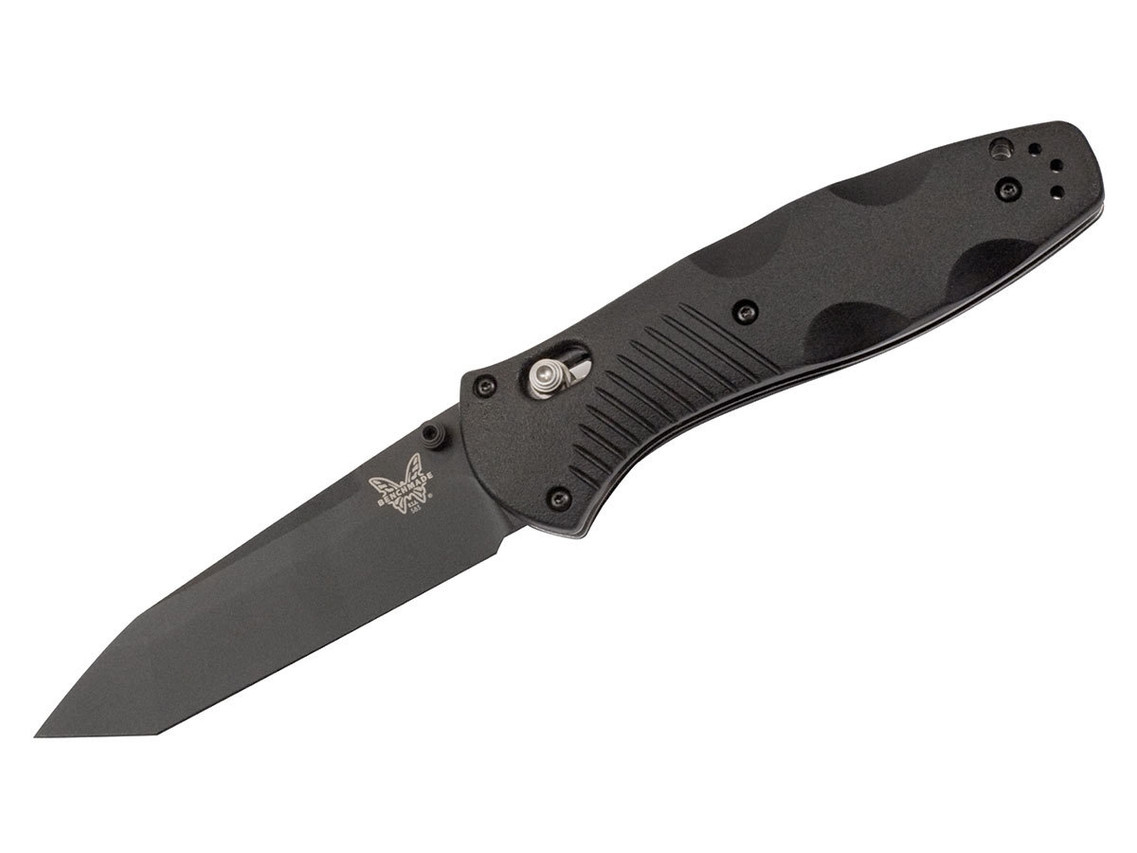
Tanto blade knives are built around one idea: carry the spine's thickness almost all the way to the point, and the tip stops being the weak spot. The angular profile is the most recognizable silhouette in modern knives, and this collection runs it from Chris Reeve Sebenzas and Reate flippers to Medford overbuilds and 1881 Knifeworks tantos.
The American tanto is two straight edges meeting at an angled point, with a secondary grind at the tip that keeps steel behind it. Because the spine stays thick nearly to the point, a tanto punches through material that would fold a needle tip, which is why the pattern took over tactical and hard use knives. The name comes from the Japanese tanto, a short blade with a curved tip, and the angular version most people picture was popularized by Cold Steel in the 1980s.
The tanto wins the tip and the drop point wins the belly. Piercing, scraping, and tip heavy work reward the tanto's reinforced point, while the drop point's continuous curve slices and skins with less effort. A tanto also sharpens as two distinct edges and gives up the sweeping belly a skinner needs, so carry what your work looks like.
The reverse tanto angles the spine down to meet a conventional edge, keeping a reinforced tip while preserving a cutting belly, and it has become the enthusiast's compromise. Our reverse tanto bench includes the Dead Reckon Ridgeback, the Black ROC Vandal, the KNAFS Lander 2, the Pro-Tech Malibu, the Benchmade Osborne, and Kershaw's Iridium and Livewire.
Chris Reeve tanto Sebenzas and Inkosis are the pattern at its most refined, and Reate runs it across the Horizon and EXO lines. Medford builds the Marauder, Praetorian, TFF-4, and Primus like the tip is the whole point, while Auxiliary Manufacturing and Chaves bring it to integral and premium builds. The Bradford G-Tanto takes the profile to a hard use fixed blade, and the Benchmade Shootout, Medford Merc-1, and Heretic Hydra carry it into our OTF knives.
Free Shipping Made In USA