 Free Shipping
 Made In USA

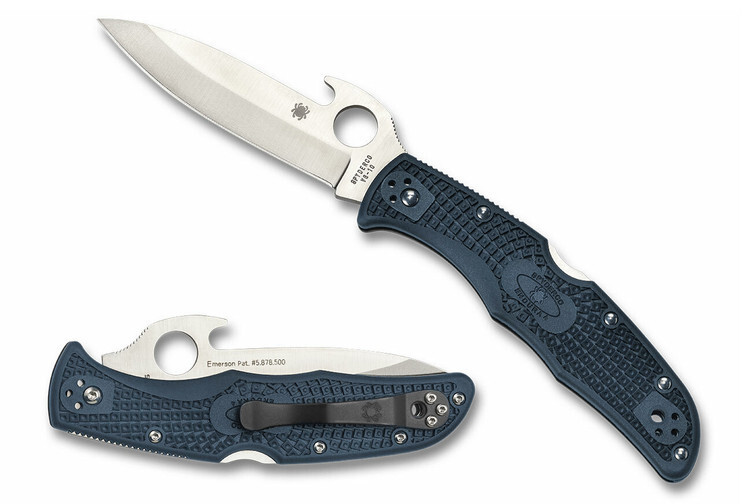
Spyderco has built knives in Seki City, Japan, since the very beginning. The first production C01 Workers came off the line there in 1981, made by the Seki maker who became Spyderco's longest running Japanese partner, in a city that has been forging blades for some 800 years. That partnership still produces some of Spyderco's most iconic knives, and our Spyderco history covers how it started.
The Delica and Endura have been refined through four generations here and set the standard for lightweight carry. The Dragonfly 2 scales the formula down, the Police packs the most blade into a slim handle, and the Endela, Stretch 2, Caly 3.5, Ladybug 3, Manbug, and Meerkat fill in every size and style between. Most ride on lightweight FRN handles with refined back locks, built for carry comfort and clean cutting.
VG-10 is the Seki standard, a stainless that balances edge retention, corrosion resistance, and easy sharpening. Seki sprint runs have long introduced Japanese super steels like ZDP-189, HAP40, Super Blue, and SG2, and today's upgrades bring K390, SPY27, and Cru-Wear. Our comparison of every major knife steel and the sprint runs and exclusives page show what's available.
Seki builds the original marine workhorses of the Salt Series, including the Salt 2, Pacific Salt 2, Atlantic Salt, and Tasman Salt 2 in H-1, H-2, and LC200N. The Rescue line and Harpy hawkbill cover seatbelts, line, and rope, and fixed blades like the Bill Moran and Enuff 2 round out the working side.
Seki also turns out Spyderco's kitchen knives, from the Minarai, Wakiita, and Itamae series of gyuto, nakiri, bunka bocho, funayuki, and petty knives to paring and utility blades. For the American side of production, see the Golden, Colorado lineup, or browse all of Spyderco.
Free Shipping Made In USA