 Free Shipping
 Made In USA

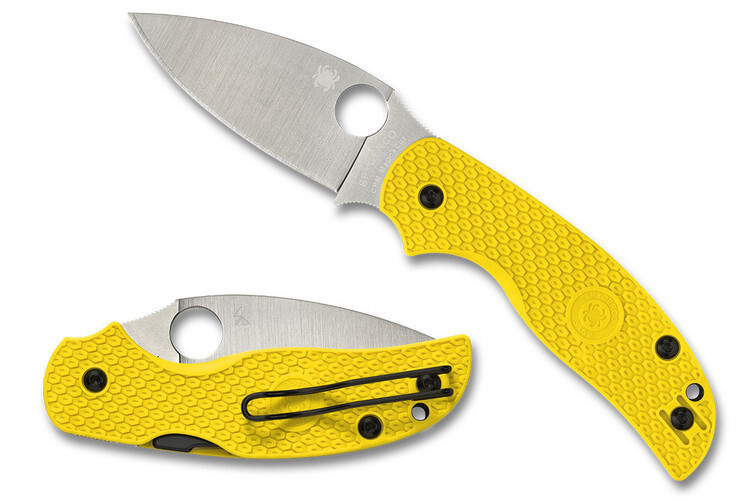
The Spyderco Salt Series solves the problem that eats most folding knives: corrosion. Even good stainless steels will spot and pit after enough saltwater, humidity, and wet gear, so in late 2003 Spyderco launched a line built for divers, fishermen, kayakers, and anyone who works around water, with nitrogen steels that don't rust and non-corrosive hardware throughout. More than twenty years on, it is still the standard for rustproof knives, and our Spyderco history covers how it got there.
H-1 started it all, using nitrogen instead of carbon so it simply will not rust in normal use, at some cost to edge retention. When its foundry stopped making it, Spyderco developed H-2 to carry the same rustproof performance forward. LC200N is heat treated to a higher hardness for better edge holding while staying extremely corrosion resistant, and MagnaCut now brings edge retention and toughness to the line at a level it never had. Our comparison of every major knife steel goes deeper.
Built in Golden, the MagnaCut Salts and several LC200N models put rustproof steel into the knives you already trust: the Paramilitary 2, Para 3, Military 2, Manix 2 and Manix 2 XL, Native 5 and Native Chief, Shaman, UK Penknife, and MicroJimbo, with the Sage 5 Salt coming out of Taiwan.
The Seki City Salts are the original marine workhorses. The Salt 2 and Pacific Salt 2 carry the lines of the Delica and Endura in H-1, H-2, and LC200N, while the Atlantic Salt, Tasman Salt 2 hawkbill, Dragonfly 2 Salt, Ladybug 3 Salt, and Saver Salt cover rope cutting, line work, and keychain carry.
Fully serrated SpyderEdge versions chew through wet rope and line that would stall a plain edge, and yellow handles make a dropped knife easy to spot on a deck or in the water. Fixed blades like the Jumpmaster 2 round out the series, and the rest of the Spyderco catalog is one click away.
Free Shipping Made In USA