
Collections
 Free Shipping
 Made In USA
Battle Horse Knives comes out of Cambridge, Ohio, and it comes out of a split. Dan Coppins and L.T. Wright met working in a stair shop, started making knives as a hobby, and built Blind Horse Knives into one of the most respected names in bushcraft between 2007 and 2013. When they dissolved the partnership at the end of 2013, each man took his own designs and started over. Coppins founded Battle Horse with his daughter Alicia McQuain, his wife Judy built the sheaths, and the company is now run by John and Alicia McQuain. If you have wondered why Battle Horse and L.T. Wright patterns feel like cousins, that is why.
Battle Horse builds in O1, the same tool steel that made Blind Horse's reputation. It is not stainless and it never pretended to be. What O1 does is take a screaming edge, hold it through a day of carving and processing, and come back sharp on a strop instead of a stone. It will patina in the first week and that patina protects it. For a knife that lives in a leather sheath in the woods rather than a pocket in an office, that is the correct trade, and it is why the bushcraft crowd has stayed loyal to this steel while everyone else chased powder metallurgy.
Most models come ground three ways and the grind changes the knife more than the handle does. A scandi puts a single wide bevel straight to the edge, which is what you want for controlled wood removal, feather sticks, and notches, and it is dead simple to maintain freehand. A saber grind starts the bevel partway up and leaves more steel behind the edge for batoning and heavier work. A flat grind slices better and handles game processing and camp kitchen duty. Pick the grind for the job first and the handle second.
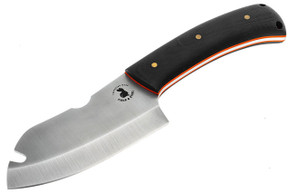
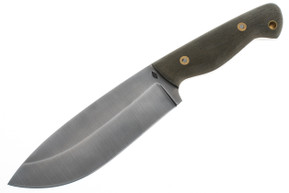
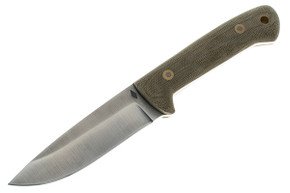
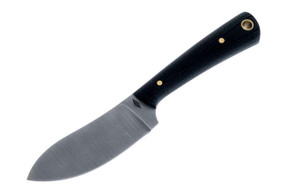
The lineup runs deep. The Woodsman and Woodsman Pro anchor it, alongside the Bushcrafter, Bushman, Bushbaby, Frontier First, Feather Stick, Crooked Creek, Kepsu, Sisu, Altitude, Big Jay, Patriot Scout, Maverick Scout, Scout Platoon, Comanche, Highlander, Explorer, Brumby, Buckeye, Birch River, Salt Fork, Trail Hawk, Camp Muk, Fox Hound, Battlelore, Slug, and the Smoky Mountain Razor. Handles come in canvas and linen micarta, G-10, stabilized maple, and elk antler, with several models offered as individually numbered pieces because the natural material makes each one different. The Field and Steel collaborations with Joe Price cover the Ember, Renegade, and Banshee. Sheaths are leather or Kydex depending on model. Everything is made in Ohio, one at a time.
Worth browsing against the rest of our bushcraft knives.










 Free Shipping Made In USA